
Pizza Dough Balls Going Flat? 8 Causes of Spreading Dough
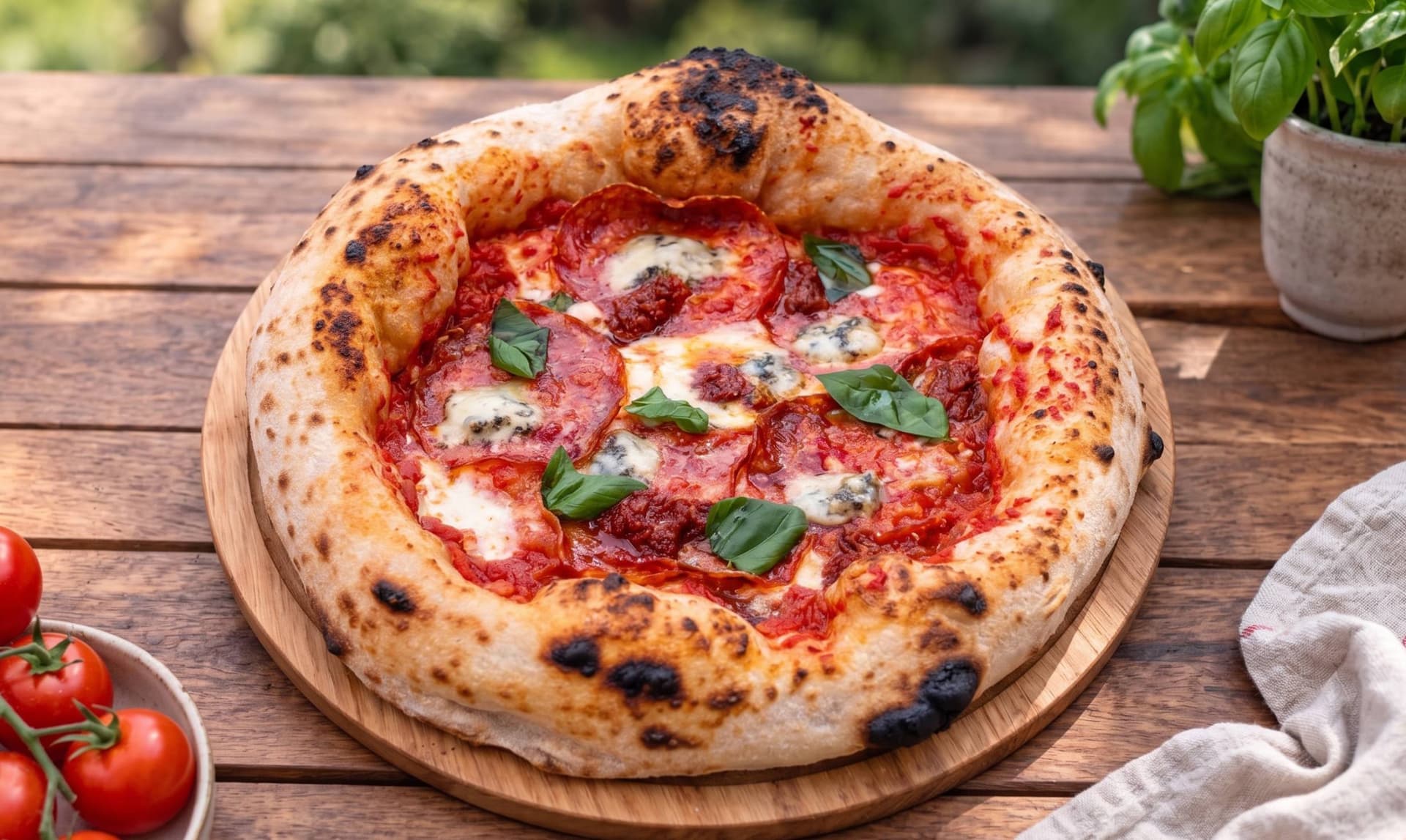
Your pizza dough spreads out, the dough balls look like pancakes instead of domes, and the rim refuses to rise in the oven. It is one of the questions we hear most often. The catch is that a flat ball is a symptom, and there are at least eight causes behind it: a fridge that lies, flour that is too weak, even plain water condensed on the lid. Below you will find a short questionnaire that points to the most likely cause, followed by an explanation of each one.
In short
- Not every flat ball is a mistake. A smooth, slightly wide ball with no big bubbles is often just ripe dough.
- The most common cause is over-fermentation. Big bubbles, a sour or boozy smell and balls running into each other say the dough went past its peak.
- Measure temperatures before you change the recipe. It can be almost 2°C warmer by the fridge door than deep inside.6 Dough right after mixing should usually be 23–25°C.
- The flour has to carry the water. Plain supermarket flour at 70% hydration will flow even when fermentation is perfect.
- A ball needs tension and support. A loosely shaped ball in a big container will spread sideways.
A flat ball is not always a problem
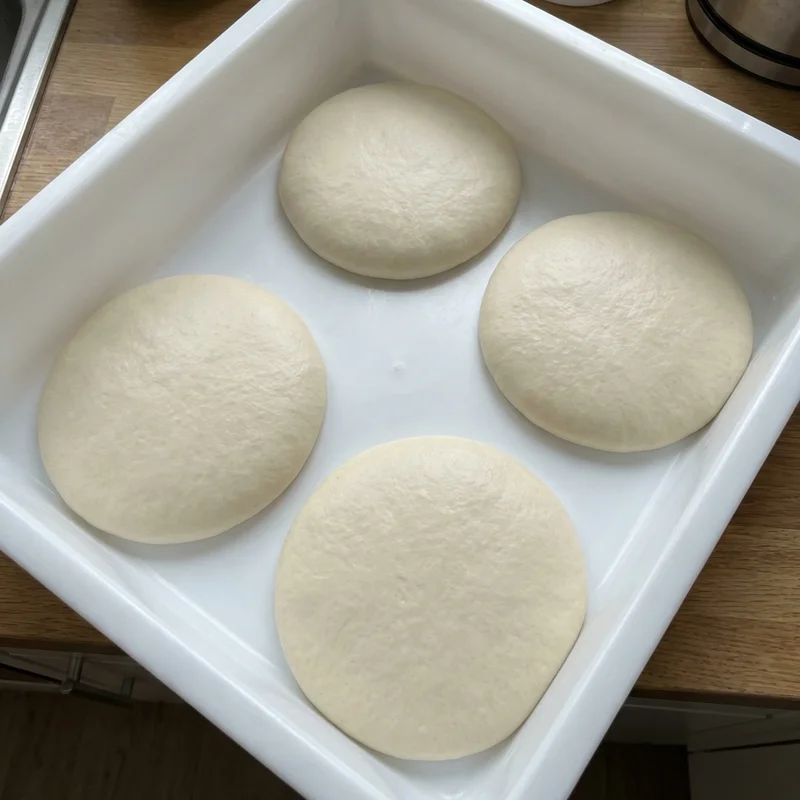
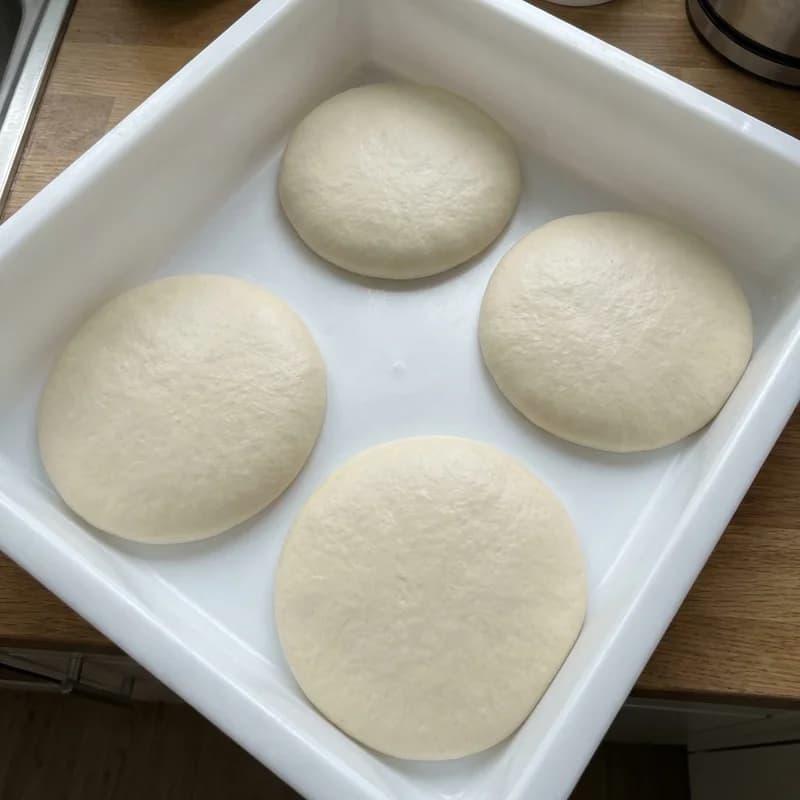
Pizza dough is a viscoelastic material. Think of thick honey with a net of springs built in: it flows slowly under its own weight, and the gluten resists.1 So every ball gets wider and lower after a few hours. That is how it should be, because relaxed gluten is what lets you stretch the base without it shrinking back.
The balls in the photo are wide, but the surface is smooth, the outline is still round and they have not run into each other. Dough like this lifts out with a scraper, stretches and bakes without drama.
The trouble starts when a ball flows all the way to the walls, sticks to your hands, tears as you lift it out, shows big bubbles on the surface or smells of vinegar. Or when it never held its shape at all, not even right after balling. Those signs have specific causes, and the questionnaire below helps tell them apart.
Find the cause in 30 seconds
Causes often come in pairs. A warm fridge and too long in balls can together turn good dough into a pancake, even though neither would have ruined it alone. So read the section listed second as well.
Why pizza dough spreads
The shape of a ball is decided by a tug of war. On one side, the weight of the dough and the gas pushing it apart. On the other, the gluten network that traps that gas and holds the form. More water means softer dough: in rheology measurements the elastic moduli of dough fall as water content rises and climb with protein content.2 Then fermentation joins in. Acids and the flour's own enzymes slowly break down the gluten,3 while the gas bubbles grow until the thin walls between them start to rupture and merge.4
A ball spreads when the force holding its shape loses. Either it was too weak from the start (flour, water, gluten, balling), or fermentation and time ate it away (temperature, yeast, hours in balls).
1. Over-fermented dough
This is the most common cause of flat balls. Over-fermented pizza dough is dough that has gone past its peak: the yeast has produced more gas than the gluten can hold, and the acids have had time to weaken it.
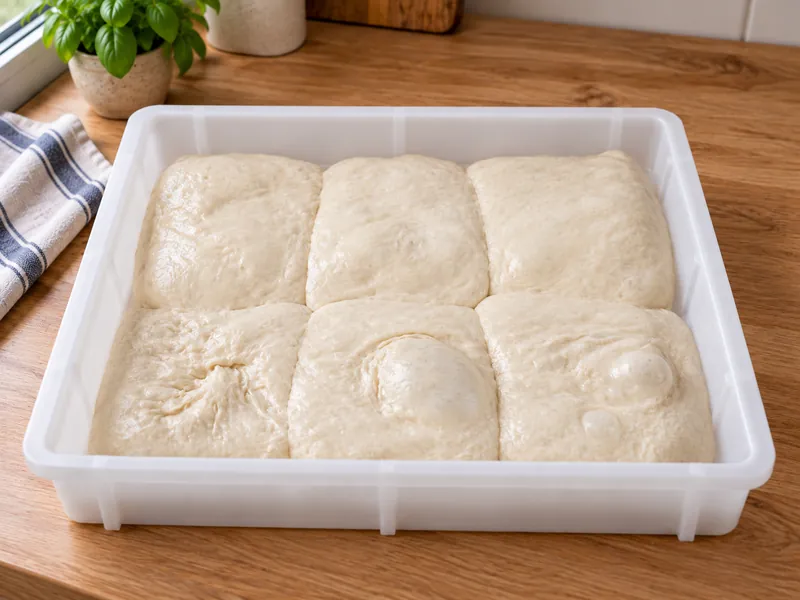
How to recognize it:
- big, irregular bubbles on the surface and against the container walls,
- a sour, vinegary or boozy smell,
- balls running together into one mass,
- dough that sticks to your hands and tears when moved,
- a base that stretches paper thin, with a rim that barely rises.
Why does it happen? An acidic environment activates the flour's proteases, enzymes that break down gluten proteins.3 At the same time the gas bubbles grow so large that the walls between them rupture and the gas escapes.4 The dough loses both strength and gas, so it flows.
The usual sources of over-fermentation are too much yeast for the time, a fridge warmer than the plan assumed, dough too warm after mixing, and too long a warm stage before baking. The fridge and dough temperature have their own sections below, because each needs a different fix.
What to do next time: match the amount of yeast to the time and temperature, not the other way round. The Pandough calculator works out the dose for the real temperature of your kitchen and fridge, and the fermentation chart shows when the dough will be in its baking window.
What to do now: bake right away. Do not wait any longer, and do not re-ball the dough. Move it gently and stretch it on a heavily floured counter. If the balls have merged into one mass, bake a pan pizza.
2. Your fridge runs warmer than you think
4°C on the display does not mean 4°C at the dough. A study of home fridges found an average of about 5.1°C near the door, 4.2°C by the inner wall and 3.4°C in an inner container.6 Yeast still works at 4°C, only slowly,7 so a few extra degrees all night long make a big difference.
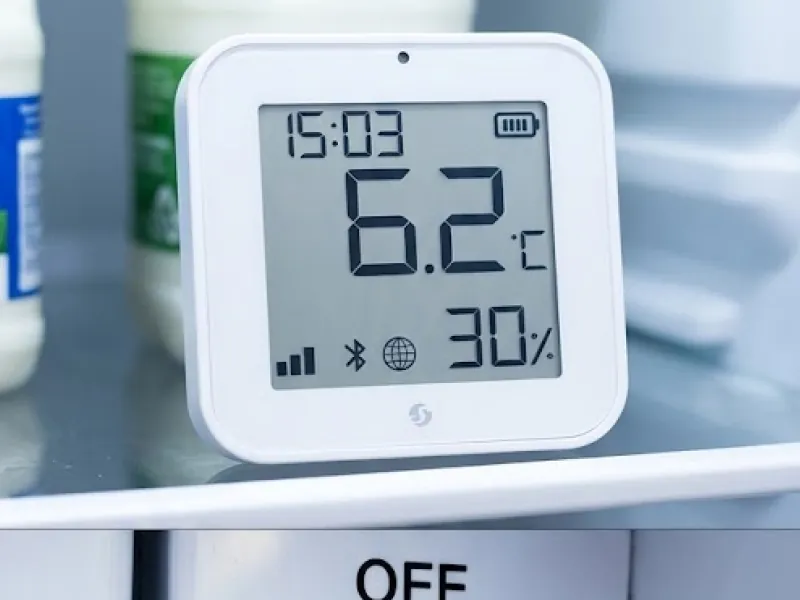
You will know this scenario when dough collapses in the fridge even though the recipe is proven and worked before. Or it works in winter and stops working in summer. Cold fermentation is very sensitive to those few degrees, because the fridge is where the dough spends most of the whole plan.
What to do: put a thermometer exactly where the dough sits, ideally one that records minimum and maximum. If the shelf is at 6°C, enter 6°C in your plan instead of resetting the whole fridge. For more on how to measure, and why a single reading after opening the door tells you nothing, see Your Fridge Is Warmer Than You Think.
3. Dough too warm after mixing
Dough that comes off the mixer at 28°C starts fermenting fast. The fridge will not stop it straight away: a kilogram of dough in a closed container takes hours to cool, because it has mass and thermal inertia. All that time the yeast is working in the warmth, and the plan drifts before the dough has even chilled.
Where does warm dough come from? Warm water, a warm kitchen and, most often, the mixer. Friction during a long machine mix can heat the dough by several degrees.
Suspect this cause when the fridge has been measured and is cold, yet the dough is still full of gas after a night.
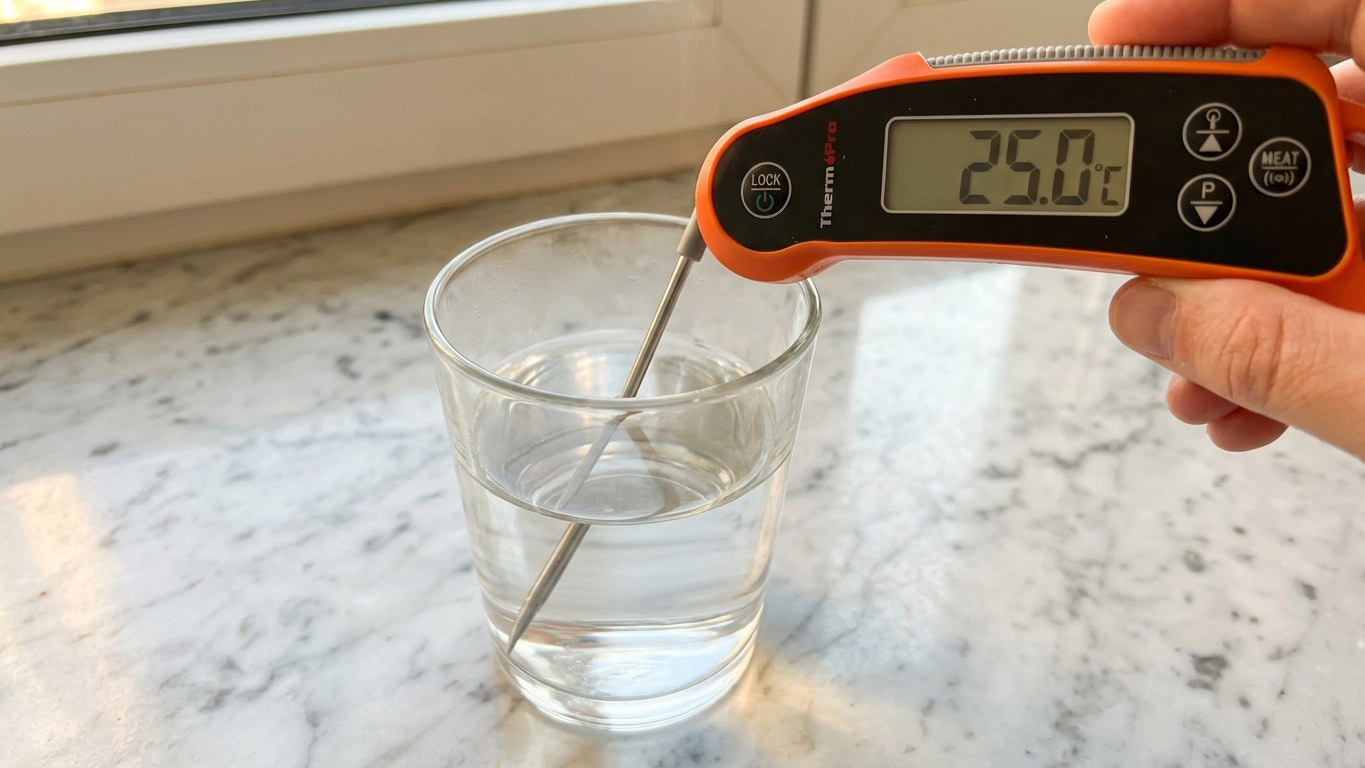
What to do: measure the dough with a kitchen thermometer right after mixing. Aim for 23–25°C in most cases. In summer use cold water from the fridge, and take breaks when mixing by machine. A big block of dough cools more slowly than balls, so if you keep the dough in bulk in the fridge, use a flat, wide container or split it into 2–3 smaller pieces. The calculator suggests the water temperature for your target dough temperature.
4. Too long in balls
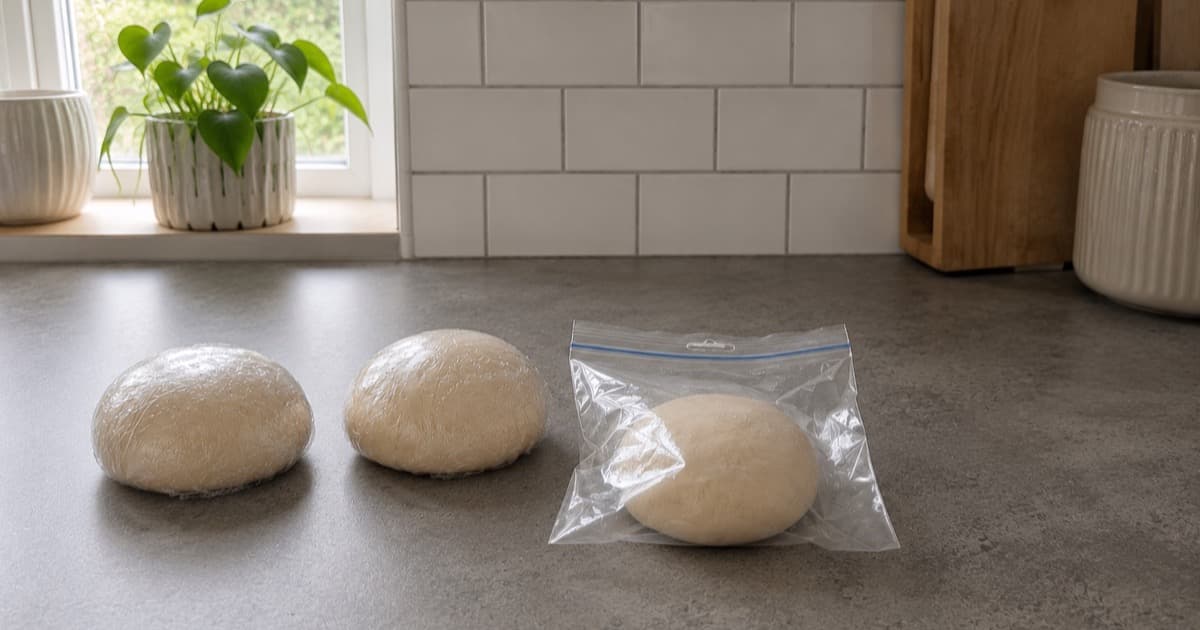
A freshly shaped ball has tight gluten. Over time that tension slowly lets go, because dough, like any viscoelastic material, goes through stress relaxation.1 After a few hours this is what you want: the ball stretches easily. After two days in balls, especially with weaker flour, the gluten is so relaxed that the ball simply flows.
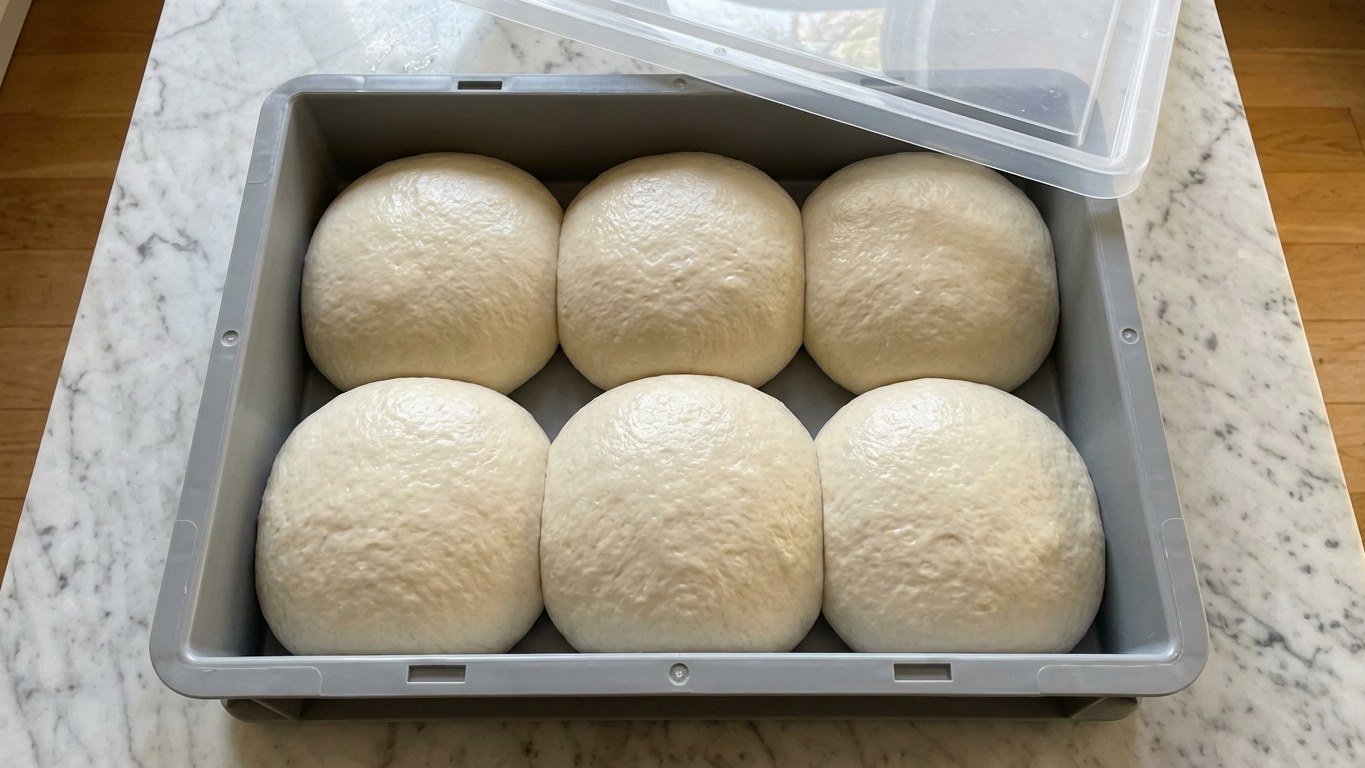
Italians separate two stages: puntata is fermentation in bulk, appretto is fermentation in balls. Classic Neapolitan dough, according to AVPN, sits in balls for 4–6 hours.8 In home plans of 48 or 72 hours, pizza dough in the fridge often spends that whole time as balls, because the balls are shaped right after mixing.
You will know this cause when the balls are smooth and good-looking, with no signs of over-fermentation, yet spread wide.
What to do: move most of the time to bulk. On a long plan keep the dough in one container in the fridge and ball it anywhere from a few to a dozen or so hours before baking, depending on flour strength. The weaker the flour, the shorter the appretto.
5. Flour too weak for this hydration
Every flour has a ceiling for water. Plain all-purpose supermarket flour, with no W strength on the bag, starts to struggle at around 60% hydration. Pizza flour with W 250–300, such as Caputo Pizzeria, handles roughly 58–65% well. Only strong W 300+ flours with more than 13% protein, like Caputo Saccorosso, hold their shape at 70% and through longer fermentation.
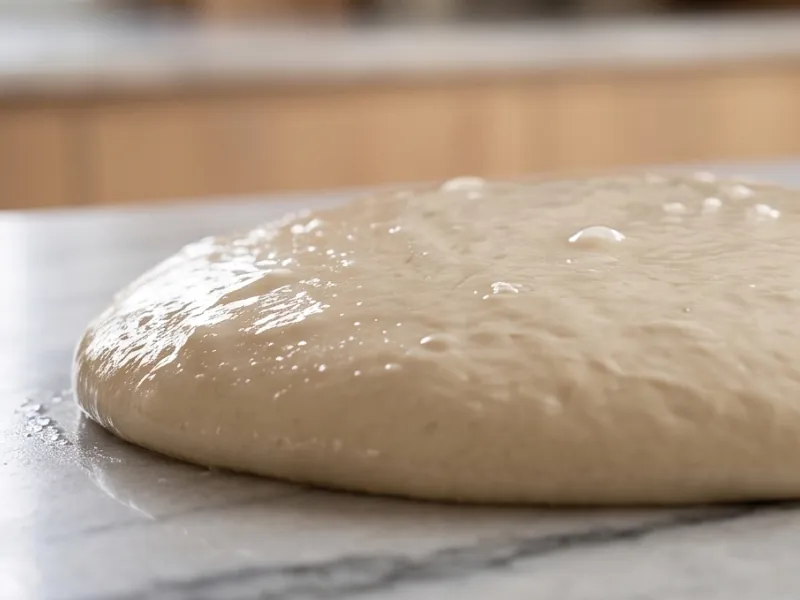
Too much water loosens dough, and more protein strengthens it.2 Weak flour also has a shorter fermentation window. Its gluten breaks down sooner, so a plan that suits strong flour turns out to be too long for a weak one.
You will know this scenario when the dough is too wet from the very start: sticky and slack before fermentation has even begun.
What to do: lower hydration by 3–5 percentage points or switch to a stronger flour. This is what Farina Prima, the flour-first method, is built on: you start from the actual flour you have and derive hydration and fermentation time from its strength, instead of forcing it into someone else's recipe. In the Pandough flour database you can check the strength and recommended hydration of your flour, and the calculator warns you when you overdo the water.
6. Weak gluten or loose balling
Even good flour gives flat balls if the gluten never had a chance to develop. Two typical cases: dough stirred only until the ingredients came together, with no kneading or folding, or balls shaped loosely, with no tight surface.
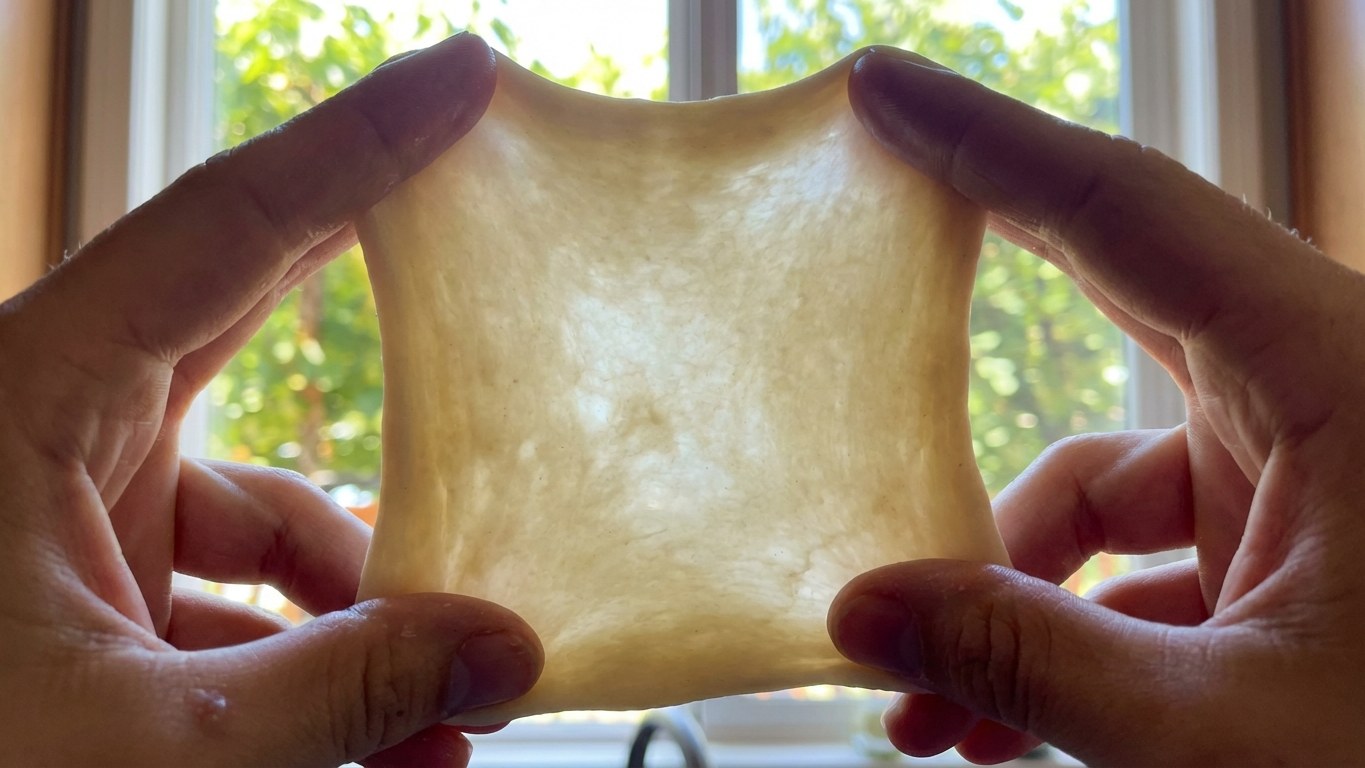
Salt matters too. Sodium chloride strengthens the gluten network,5 so dough made with too little salt, or none because it was forgotten, is noticeably slacker. A typical dose in pizza dough is 2.5–3% of the flour weight.
You will know this cause when the balls did not hold their shape during balling or right after it, although the flour and hydration are sensible.
What to do: knead until the dough is smooth and springy, or do 2–3 sets of folds every 20–30 minutes. When balling, pull the surface of the dough underneath until the skin is smooth and tight and the seam sits at the bottom. If the dough tears while you shape it, give it 15 minutes of rest and finish then.
7. Water in the container
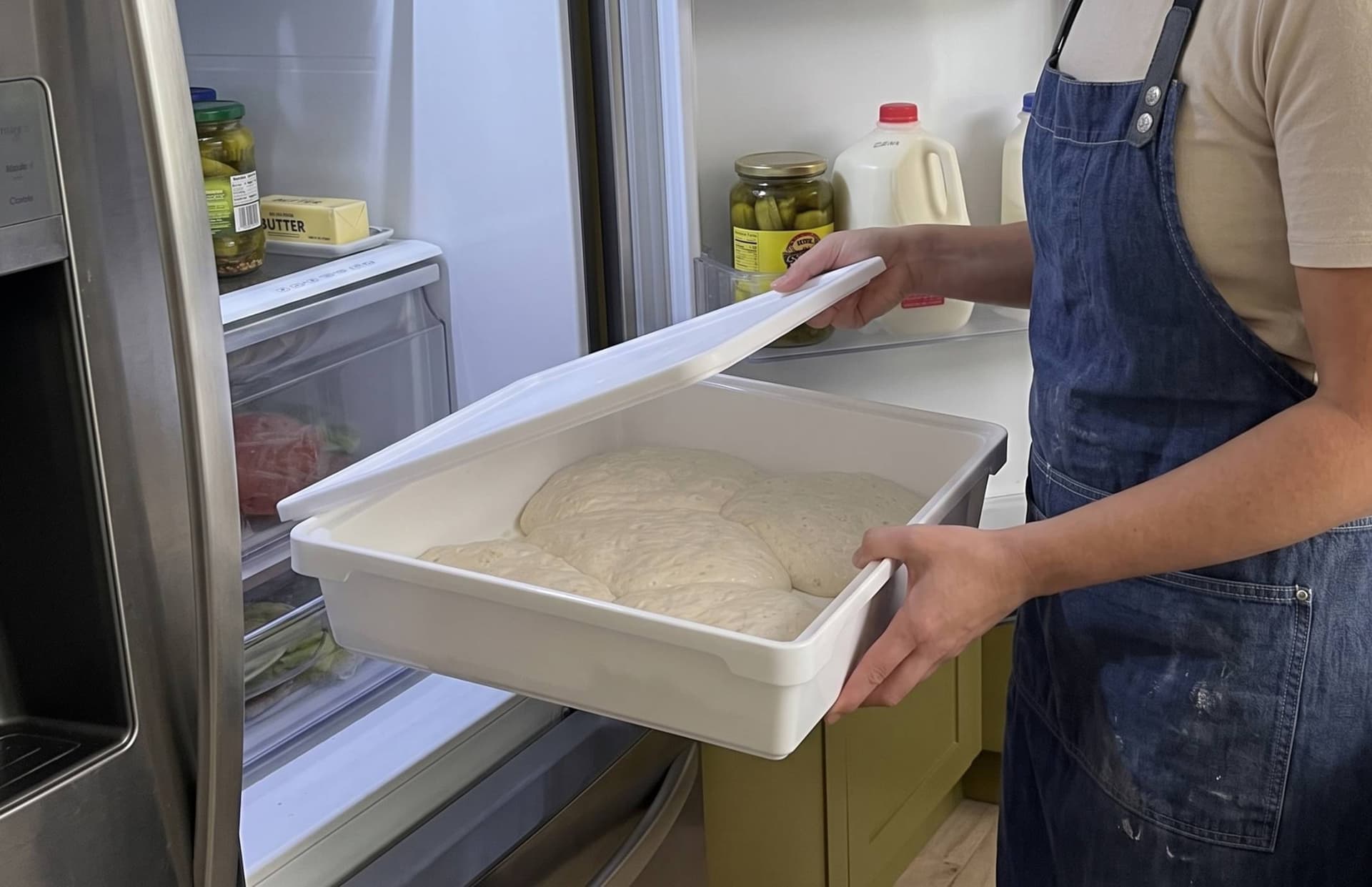
Warm dough goes into a closed container and into the fridge. The air inside is warm and humid, the lid cools quickly, and the vapor condenses on it and drips back onto the balls. A wet surface softens the ball's skin, so the dough spreads and sticks to the bottom. It tears when you lift it out, and the dusting flour clumps.
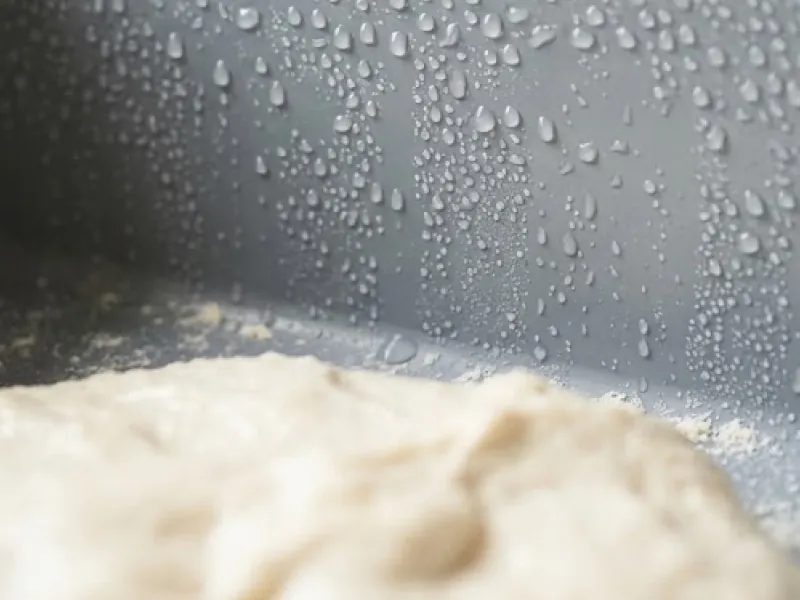
This one is easy to spot: water droplets on the lid, wet patches on the dough, a puddle along the walls.
What to do: for the first 1–2 hours in the fridge leave the lid slightly open or cover the container with a cloth, so the vapor can escape before the dough has cooled. Then seal it, because an uncovered ball dries out and forms a crust. If water has already appeared, gently pat the balls dry with a paper towel before stretching.
8. Too much room in the container
A ball with nothing to lean on spreads sideways. A ball in a snug container, or surrounded by neighbors, has nowhere to go, so it rises upward. This is pure geometry and no fault of the dough, but in a photo it looks like failure.
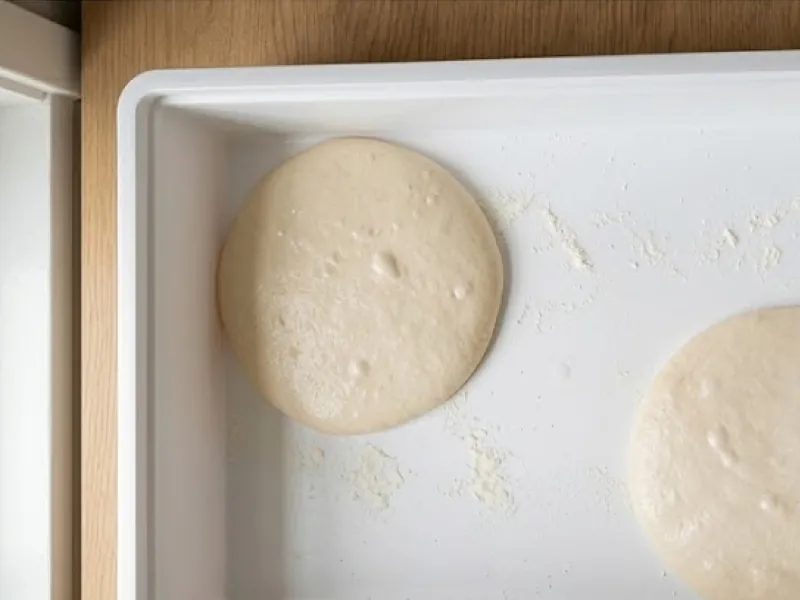
You will know it when balls placed far apart in a big container are wide and low, while the same balls in smaller containers look fine.
What to do: use individual containers only a little wider than the ball, or arrange the balls in a dough box 2–3 cm apart so they support each other as they ferment. Once they touch, you can separate them with a dough scraper.
PRO TIP With four or more balls, one big dough box works better than a handful of random containers. Balls set 2–3 cm apart support each other and rise upward. A flat base and tapered walls make them easy to lift with a scraper, and a tight lid keeps them from drying out. The Ooni set is one example: two dough boxes with lids, each holding up to six 250 g balls, and they stack.
How to rescue flat dough
- Dough smooth, just wide: bake as usual. Lift the ball with a scraper together with the flour underneath it, and do not press down the rim.
- Dough over-fermented: bake right away. Stretch carefully, on a thicker layer of flour. Bake merged balls as a pan pizza.
- Dough slack but not over-fermented, with more than 2–3 hours before baking: you can re-ball it. The gluten has to rest afterwards, otherwise the base will shrink back.
- Dough cold, straight from the fridge: it is stiffer and easier to move. Stretch it only after it has warmed up, but do not keep the dough in the warmth longer than necessary.
Diagnosis table
| What you see | Most likely cause | Where to read |
|---|---|---|
| Big bubbles, sour smell, balls ran into each other | Over-fermentation | Over-fermented dough |
| The recipe used to work, now the dough collapses in the fridge | A warmer fridge | Fridge |
| Fridge is cold, dough is gassy anyway | Dough too warm after mixing | Dough temperature |
| Smooth balls, but very wide after 1–2 days | Too long in balls | Time in balls |
| Slack and sticky from the very start | Flour too weak for this hydration | Flour and hydration |
| Did not hold their shape even during balling | Weak gluten, too little salt, loose balling | Gluten and balling |
| Water droplets on the lid, wet patches | Condensation | Water in the container |
| Wide only in a big container | No support | Container |
Plan your dough around your flour, your fridge and your baking time
Recipe: neapolitan pizza
If your flat balls show up when you use a preferment, check how to catch the peak of poolish and biga as well. An overripe preferment brings gluten that is already partly broken down into the dough.
FAQ
Sources
- Dobraszczyk B.J., Morgenstern M.P., "Rheology and the breadmaking process", Journal of Cereal Science, 2003. Dough as a viscoelastic material: flow under load and stress relaxation.
- Navickis L.L., Anderson R.A., Bagley E.B., Jasberg B.K., "Viscoelastic properties of wheat flour doughs: variation of dynamic moduli with water and protein content", Journal of Texture Studies, 1982. The elastic moduli of dough fall with water content and rise with protein content.
- Loponen J., Mikola M., Katina K., Sontag-Strohm T., Salovaara H., "Degradation of HMW Glutenins During Wheat Sourdough Fermentations", Cereal Chemistry, 2004. An acidic environment activates flour proteases, which break down glutenin.
- Gan Z., Ellis P.R., Schofield J.D., "Gas Cell Stabilisation and Gas Retention in Wheat Bread Dough", Journal of Cereal Science, 1995. Stability of gas bubbles and how they merge late in fermentation.
- Beck M., Jekle M., Becker T., "Impact of sodium chloride on wheat flour dough for yeast-leavened products. I. Rheological attributes", Journal of the Science of Food and Agriculture, 2011. NaCl improves gluten network formation.
- Lee et al., "Investigation of Internal Temperature Distribution in Domestic Refrigerators and Freezers", Journal of Food Hygiene and Safety, 2023. Temperature differences between the door, the wall and an inner container of the fridge.
- "Effect of different producing methods on physicochemical and fermentation properties of refrigerated dough", Journal of Food Composition and Analysis, 2023. Yeast activity in refrigerated dough.
- Associazione Verace Pizza Napoletana, Disciplinare Internazionale: puntata and appretto in Neapolitan dough. Accessed 2026-09-27.
* As an Amazon Associate, Pandough earns from qualifying purchases.
What is Pandough?
Pandough is a dough manager that builds a precise plan around your flour, kitchen, oven and schedule.
Try the calculator