
Pizza Preferments: Poolish, Biga and Sourdough
In short
- No preferment is "better". Each pulls the dough in a different direction. Poolish (100% water) gives extensibility and a creamy, yeasty aroma. Biga (44–45% water) gives resistance, spring and a reserve of strength for oven rise. Sourdough gives acidity and the widest range of flavor, at the cost of more variability.
- Start with 20% of the flour in the preferment. 10% is a subtle effect, 30% a clear one. Always subtract the preferment's flour and water from the final dough; salt is calculated on the total flour and added only to the final dough.
- Ripeness matters, not the clock. The same poolish ripens on a completely different schedule at 18°C and at 26°C. A time without temperature and yeast amount means nothing.
- Poolish is not worse in a 450°C oven. Poolish dough baked well at 450°C in 60 seconds.1 What loses is an over-ripe preferment, of any kind.
- A preferment is not a preserve. Yeast fermentation does not protect against pathogens, so we do not keep it warm for days.
What a preferment actually does
A preferment is a portion of flour and water with a little yeast or sourdough, fermented for a few to a dozen or so hours before it goes into the final dough.2 We move part of the fermentation ahead of the mix and get three things at once: deeper aroma, different gluten behavior and, usually, gluten strength that holds longer.
The mechanism is simple. Yeast, and in sourdough also lactic acid bacteria (LAB for short), produce alcohols, esters and organic acids during that time. The flour's own enzymes break starch into sugars and proteins into amino acids. Those amino acids come back in the oven as roasted, nutty crust notes.3 Acidity also activates the flour's proteases, enzymes that gently break down gluten, which is why dough with a preferment stretches more easily.4 You taste a preferment most in a lean dough (just flour, water, salt and yeast); in a dough loaded with fat and sugar its contribution gets lost.
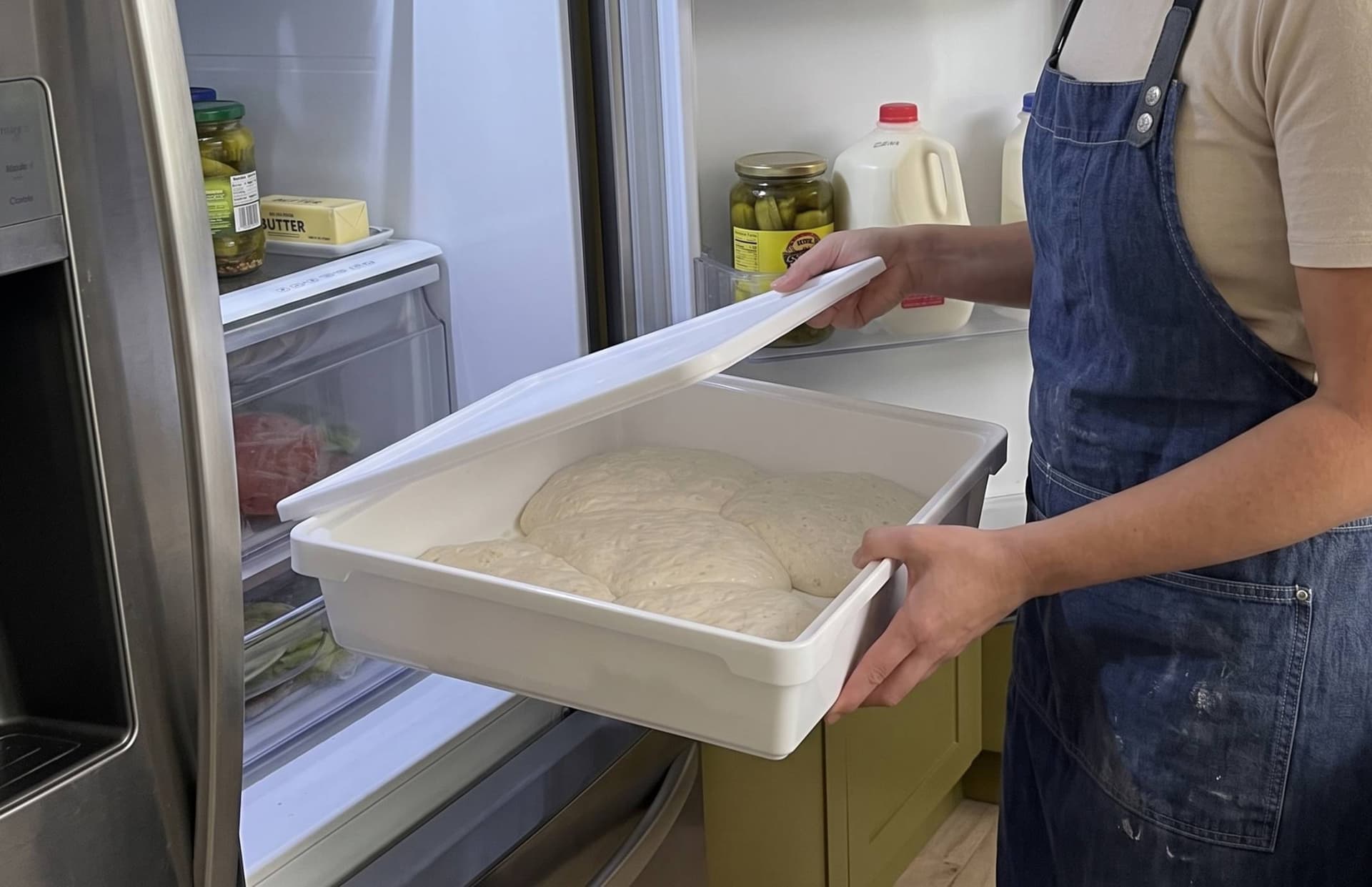
Two iron rules, whatever the type. First: a preferment holds only flour, water and a culture (yeast or sourdough), never salt or sugar. Salt slows both yeast and bacteria; sugar speeds the yeast up and shortens the window. Second: we run it at a controlled temperature. The fridge slows a preferment down, but it does not stop it or turn back its ripeness.
Poolish, biga, sourdough: what each does to the dough
| Poolish | Biga (classic) | Sourdough | |
|---|---|---|---|
| Hydration | 100% | 44–45% | lievito madre 45–50% · licoli ~100% |
| Share of flour | 20–30% (up to 50%) | 30% → up to 100% | depends on starter (usually 10–30%) |
| Culture | yeast | yeast (~1% fresh) | wild yeast + LAB |
| Time / temp. | 8–16 h, ~20–22°C | 15–18 h, 16–20°C | 4–12 h warm or 24–72 h cold |
| Flavor | aromatic, yeasty, creamy | clean, wheaty and nutty | widest range, tangy |
| Effect on dough | extensibility, soft crumb | resistance, spring, open rim | extensibility + acidity |
| Acidity | low | low | clear |
Poolish: extensibility and aroma
Poolish is always 100% hydration: as much water as flour. It is wet, so it mixes in easily, shortens mixing and gives a light, open crumb. It is the gentlest preferment to start with. High hydration speeds up enzymes and yeast, so the dough comes out looser and stretches without tearing, and the aroma leans yeasty, creamy and slightly alcoholic.
The catch that decides success: poolish has a narrow window, roughly 1–2 hours. One hundred percent water plus warmth means fast yeast and enzyme work at the same time, so poolish hits its peak and falls soon after. Biga at 44–45% water is far more forgiving here.
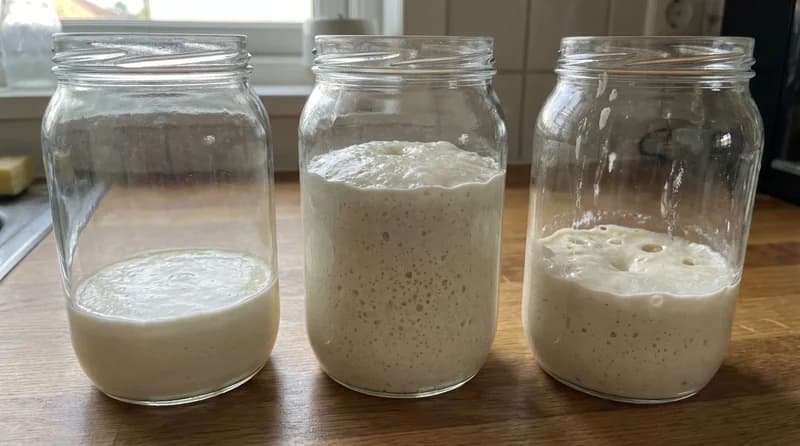
We catch poolish at its peak: a surface full of small bubbles that keep popping, a dome that is just starting to sink, and a smell of yogurt with a hint of alcohol.5 Mark the starting level with a rubber band on the jar, so you can see the moment the mass starts to recede. A poolish slightly past peak is not lost, especially at a 20% share: the fresh flour in the final dough makes up the difference. One that has collapsed hard, with streaks on the walls and a sharp alcohol smell, will give a slack, sticky dough at a high share. When the peak comes at a bad time, we put the poolish in the fridge: it slows down and buys us a few extra hours.
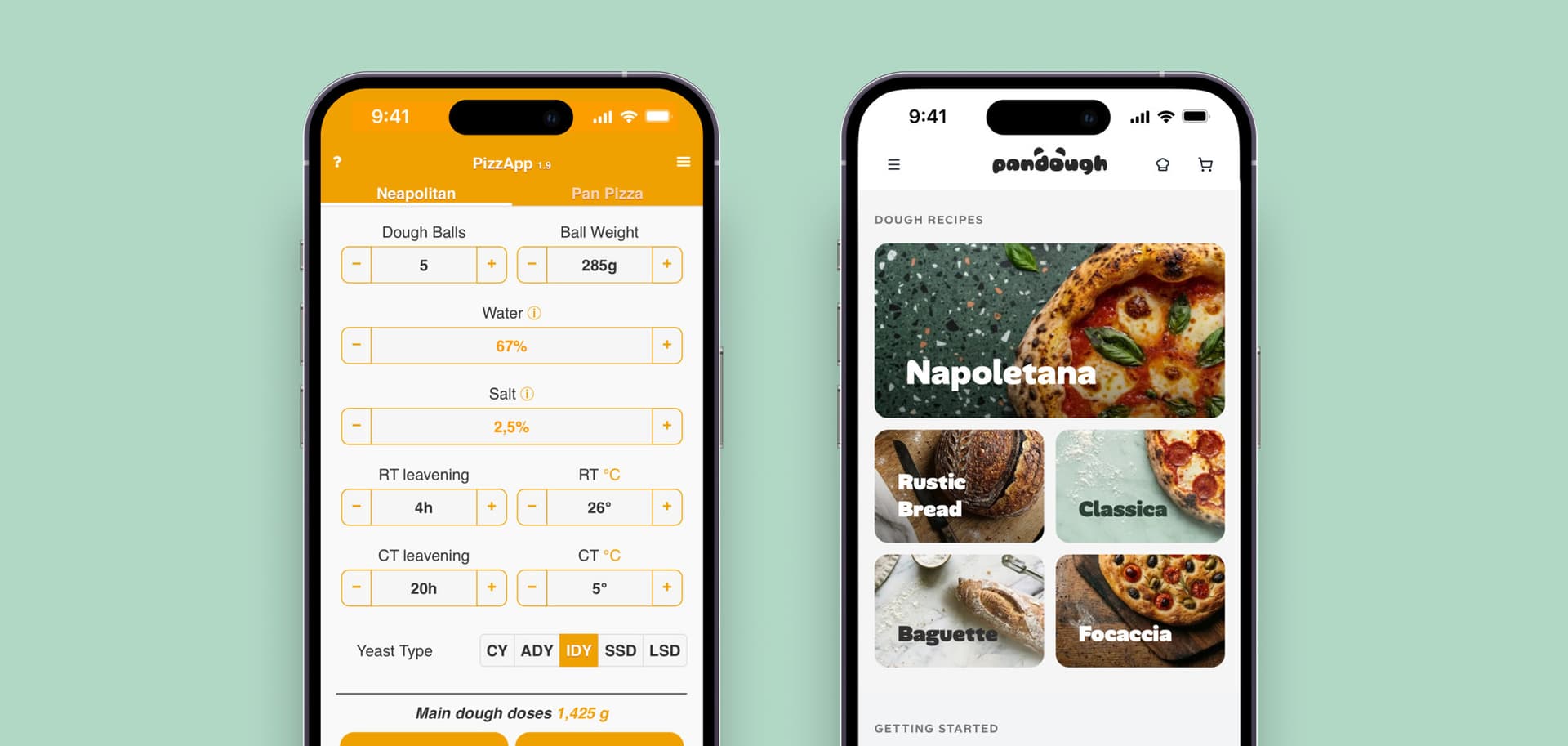
Pandough can estimate roughly when your poolish will be ready from temperature and yeast amount. Remember, though, that the calculated times are approximate, and we always watch the dough, not the clock.
Kdy bude tvůj poolish na vrcholu?
Okno vrcholu: přibližně 10 až 13 h po zamíchání.
V 12 h je poolish na svém vrcholu. Použij ho teď.
Tyto časy jsou odhady. Sleduj poolish, ne hodiny.
The same model runs poolish in the Pandough calculator: enter your kitchen temperature and the time you want to mix the dough, and the calculator sets the yeast.
Poolish with honey? A popular recipe by Vito Iacopelli adds a teaspoon of honey to the poolish. We don't, for three reasons. Yeast eats the simple sugars in honey right away, so the poolish peaks sooner and is harder to catch. Almost no honey flavor survives into the dough, because the yeast eats it. And if some sugar does survive, in 60–90 seconds at 450°C it burns the rim before the center is baked. If you want more color, add the honey to the final dough, not the preferment.
Biga: structure, spring and rim
Biga is a stiff Italian preferment. The reference point is Giorilli's biga: a formula codified by Piergiorgio Giorilli that Italian schools still refer to. 44–45% water, 1% fresh yeast, strong flour at W 300–350, 15–18 hours at 16–20°C.6
The most important and most often skipped point: biga is not kneaded. Mix only until the flour has absorbed the water. You want rough, shaggy clumps, not a smooth dough; the gluten is not developed here, the final dough does that. Hence a simple diagnosis: if your biga doubled in volume, it was almost certainly overmixed. A ripe biga is slightly swollen, smells of fermentation and alcohol, and its pieces are still separate rather than melting into one slack mass.
Biga in a jar At home you can make biga without a mixer. Pour water with dissolved yeast into a container, add flour in the right ratio, close it tight and shake until everything comes together. You get perfect, uneven clumps and undeveloped gluten, exactly as it should be.
Three variants worth knowing:
- Biga fredda ("cold"): ripens partly in the fridge, more slowly and with a wider window. A lifesaver when you cannot hold a steady 16–20°C at home.
- Biga lunga ("long"): run for up to 48 hours, usually first at about 4°C and for the last 24 hours at about 18°C, for a deeper, more mature flavor.6
- Tiga: Tony Gemignani's own variant at about 70% water, between a biga and a poolish. Easier to mix, with more strength than a poolish.7
It is also worth clearing up the naming mess. The word "biga" has historically been used for looser Italian preferments too (50–60% water), so always ask for the hydration, not the name.5 And "100% biga" does not mean 100% water. It means that all the flour goes into the preferment. Gozney and Ooni publish such formulas: a biga at 45% water and 1% yeast, with water brought up to 65–70% only in the final dough.8
Where does biga's strength come from? Low hydration slows gluten relaxation during the long ripening, so after the final mix the dough has more resistance. In Balestra and colleagues' comparison, the stiff-preferment dough had the highest elasticity and resistance to extension, but also the lowest volume during the measurement.9 The strongest dough is not automatically the best risen: gas bubbles need gluten that resists but can still stretch.10 Biga's strength is also a window, not a constant: an over-ripe biga brings in broken-down gluten and loses its advantage. That is why we match the flour to the process. In Farina Prima, the flour-first method, we start from a specific flour and derive the preferment window from its strength, not the other way round. Calculate a biga for your flour in the calculator.
Sourdough in pizza
Sourdough is a different world: a preferment built on wild yeast and LAB instead of baker's yeast. Acidity changes the dough's chemistry more than a yeasted poolish or biga: it activates gluten-degrading enzymes, so sourdough dough is less elastic and more extensible.4,11 It also gives the widest range of flavor, from milky to vinegary, fruity and roasted, because every culture has a different microbial makeup.
Two forms worth telling apart: lievito madre (pasta madre) is a stiff culture, 45–50% water; licoli is a liquid culture, ~100% water. Licoli is easier to spread through the dough, which is why it ends up in pizza more often.
Pizza on sourdough alone
The real ranges in the recipes we collected look like this: licoli ~14–21% starter weight relative to total flour, pasta madre ~25–30%. Schedules vary widely, from next-day pizza to multi-day cold fermentation. With sourdough there is no single window; what counts is the culture's strength, the temperature and how sour you want the pizza.
Sourdough instead of yeast in a biga or poolish
The honest answer up front: there is no reliable "one gram of yeast = X grams of sourdough" conversion. A starter brings a live culture, flour, water and acidity all at once, so a 1:1 swap makes no sense. Instead, we set the target hydration of the preferment and subtract exactly as much flour and water from the final dough as the starter brought in.
For a sourdough biga, Italian recipes are specific. Biancolievito gives a biga of 300 g flour, 150 g water and 75 g lievito madre, ripened for 15 hours at 18°C.8 The effect is predictable: the dough ripens more slowly and more sourly than on baker's yeast. The calculator subtracts the starter's flour and water for you.
Digestibility: what the research actually says
In a study on pinsa romana, a biga inoculated with sourdough lowered the predicted glycemic index from 71.3 to 63.9, but did not improve protein digestibility.12 In Neapolitan pizza, fermentation with LAB clearly reduced FODMAPs, the fructans behind bloating, although protein digestibility again did not change.13 These are in vitro results, so "sourdough pizza is lighter" is today a well-supported hypothesis, not a proven fact.
A preferment is not a preserve
Fermentation is not a safety barrier. Raw flour can carry pathogens, which is why we do not taste raw dough or preferment. In a study on long-fermented yeasted dough, Salmonella and Staphylococcus aureus multiplied at room temperature despite active fermentation; Salmonella grew about 250-fold at 21°C in a day.14 At high counts, Staphylococcus aureus produces toxins that baking does not destroy.15 The bacteria die in the oven, the toxins stay.
In practice: a poolish that sagged a little overnight is a quality problem, not a safety one. Holding a preferment warm for days is something else. Plan it for one ripening cycle, and if you have to wait, keep it in the fridge. Mold, unnatural color or a putrid smell mean one thing: straight in the bin, no attempts to rescue it by baking.
How much preferment to add and how to calculate it
Starting point: 20% of the total flour in the preferment. Ten percent gives a subtle effect, thirty a clear flavor and a noticeable change in structure. For poolish, the most forgiving range is 20–30%; above that, the poolish's ripeness starts to decide the whole dough.1 100% biga amplifies everything at once, strengths and mistakes: there is no fresh flour to dilute an over-ripe preferment, and you then have to work 20–25 percentage points of water into a stiff, ripe mass.
The arithmetic rule is always the same: subtract the preferment's flour and water from the final dough. Salt is calculated on the total flour and added only to the final dough. With sourdough you calculate the same way, just from the starter's hydration: 100 g of licoli (100%) is 50 g flour and 50 g water, 100 g of pasta madre (50%) is about 67 g flour and 33 g water.
Below is the same Neapolitan dough in four versions. Switch the preferment and its share, and the radar and dough visualization show what changes: poolish and sourdough push the dough toward extensibility, biga toward strength, and sourdough raises acidity.
Stejné těsto, čtyři starty
Hydratace předtěsta: 100%

Neapolské těsto s hydratací 65%, Caputo Pizzeria, 24 h s 20 h v lednici. Každé předtěsto se použije na svém vrcholu.
Předtěsto, připravené jako první
- Mouka
- 119 g
- Voda
- 119 g
Finální těsto
- Mouka
- 477 g
- Voda
- 268 g
In the Pandough calculator the same split is calculated for your number of dough balls, your flour and your schedule, including the yeast in the preferment and in the final dough.
How to recognize a ripe preferment
One thing changes everything: a clear container with the starting level marked. Otherwise you are judging by eye.
- Poolish is ready when the surface is full of small bubbles, the dome is just starting to sink, and it smells like yogurt with a hint of alcohol.
- Biga swells slightly and smells of fermentation and alcohol, but its clumps are still separate. Wet, shiny patches on the surface or one merged mass are a sign it is over-ripe.
- Sourdough is used after a refresh, when it rises clearly and predictably, not straight from the fridge if you want repeatable results.
What to choose for your oven and schedule
Short on time and want repeatability: poolish, 8–12 hours, an easy final mix. You have 16–24 hours and a steady 16–20°C: classic biga gives the springiest, tallest rim, especially in canotto style. In a home oven (250–300°C), poolish or a mild sourdough with higher hydration works well, and in a pizza oven (430–485°C) any preferment does, as long as you hit its peak. Choose sourdough deliberately: you pay for its aroma and acidity with more variability.
Plan a preferment dough for your flour and oven
Recept: neapolitan pizza
Common mistakes
- Past-peak preferment at a high share. A badly collapsed poolish or an over-ripe biga brings in broken-down gluten, so the dough comes out weak, sticky and flat.
- Too much yeast. The preferment peaks before you can use it. Match the yeast to the time and temperature, not the other way round.
- Planning by the clock. 12 hours at 18°C and 12 hours at 26°C are two different preferments. Also check how warm your fridge really is.
- Salt or sugar in the preferment. Salt slows yeast and bacteria, sugar shortens the window.
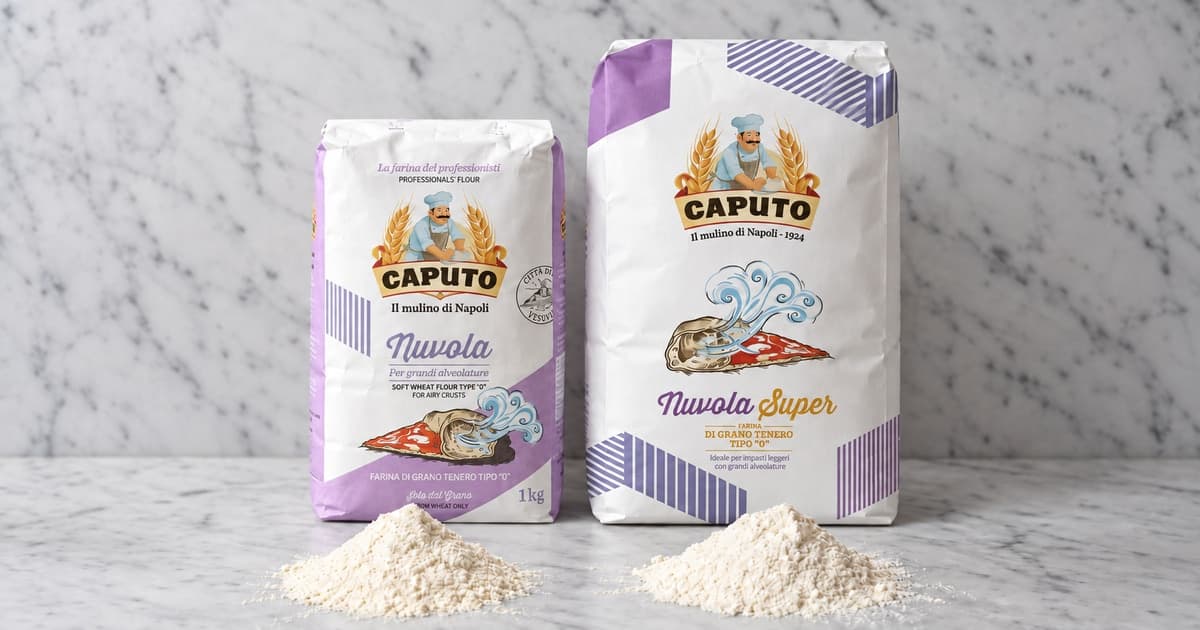
- Flour too weak for the process. For a poolish at 20–30% of the flour, W 260–320 is enough. A long biga or 100% biga needs W 300–350 and about 13% protein, like Caputo Saccorosso.
- Not subtracting the preferment's flour and water. It throws off the hydration of the whole dough.
- A multi-day preferment held warm. At that point it is not a flavor question, it is a safety one.
FAQ
Sources
- Al-khamaiseh A. et al., "Leveraging Natural Fermentation: A Tailored Poolish Dough Technique for Enhancing the Quality, Texture, and Shelf-Life of Arabic Flatbread", Journal of Food Processing and Preservation, 2026. Poolish flatbread baked for 60 s at 450°C; best results at a moderate preferment share. The poolish in this study was backslopped, not a classic overnight one.
- Nathan Myhrvold, Francisco Migoya, Modernist Pizza (2021): definitions of poolish and biga, flour share, times.
- Thiele C., Gänzle M.G., Vogel R.F., "Contribution of Sourdough Lactobacilli, Yeast, and Cereal Enzymes to the Generation of Amino Acids in Dough Relevant for Bread Flavor", Cereal Chemistry, 2002.
- Loponen J., Mikola M., Katina K., Sontag-Strohm T., Salovaara H., "Degradation of HMW Glutenins During Wheat Sourdough Fermentations", Cereal Chemistry, 2004. An acidic environment activates flour proteases that break down glutenin.
- King Arthur Baking, "Preferment", Professional Baking Reference. Preferment ripeness, hydrations, biga naming. Accessed 2026-09-23.
- Piergiorgio Giorilli, Il grande libro del pane (2018): classic biga (44–45%, 1% yeast, 16–20°C) and 48-hour biga.
- Tony Gemignani, The Pizza Bible (2014): poolish and his own "Tiga" variant at ~70%.
- Reference formulas: Gozney and Ooni ("100% biga", 45% water in the biga), Biancolievito (lievito madre biga, 300 g flour, 150 g water, 75 g lievito madre, 15 h at 18°C).
- Balestra F., Pinnavaia G.G., Romani S., "Evaluation of the Effects of Different Fermentation Methods on Dough Characteristics", Journal of Texture Studies, 2015. Stiff-preferment dough (60% water): highest storage modulus (G′ 10,982 Pa) and resistance to extension, lowest volume.
- Sroan B.S., Bean S.R., MacRitchie F., "Mechanism of gas cell stabilization in bread making. I. The primary gluten–starch matrix", Journal of Cereal Science, 2009. Gas bubble stability and the optimum of gluten strength.
- Angioloni A., Romani S., Pinnavaia G.G., Dalla Rosa M., "Characteristics of bread making doughs: influence of sourdough fermentation on the fundamental rheological properties", European Food Research and Technology, 2006. Sourdough dough less elastic and less firm than baker's-yeast dough.
- Costantini A. et al., "Sourdough 'Biga' Fermentation Improves the Digestibility of Pizza Pinsa Romana: An Investigation through a Simulated Static In Vitro Model", Nutrients, 2023. pGI 63.9 versus 71.3; no improvement in protein digestibility.
- Di Stasio L. et al., "Impact of Microbial Leavening Agents and Fermentation Time on the In Vitro Digestibility of Neapolitan Pizza", Foods, 2025. FODMAP reduction with LAB fermentation.
- Pao S. et al., "Growth of Salmonella enterica and Staphylococcus aureus in no-knead bread dough during prolonged yeast fermentation", Journal of Food Protection, 2011. Salmonella +2.4 log CFU/g after 24 h at 21°C.
- U.S. FDA, "Bad Bug Book (Second Edition)", 2012. Staphylococcus aureus: heat-resistant enterotoxins.
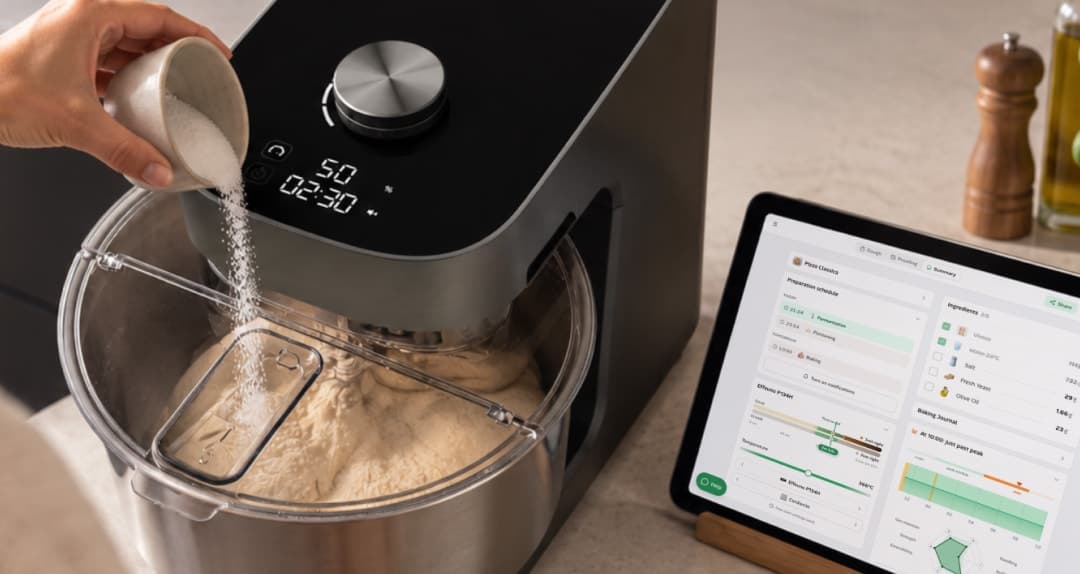
Co je Pandough?
Pandough je správce těsta, který sestaví přesný plán podle tvé mouky, kuchyně, pece a časových možností.
Vyzkoušet kalkulačku