
Pinsa Romana
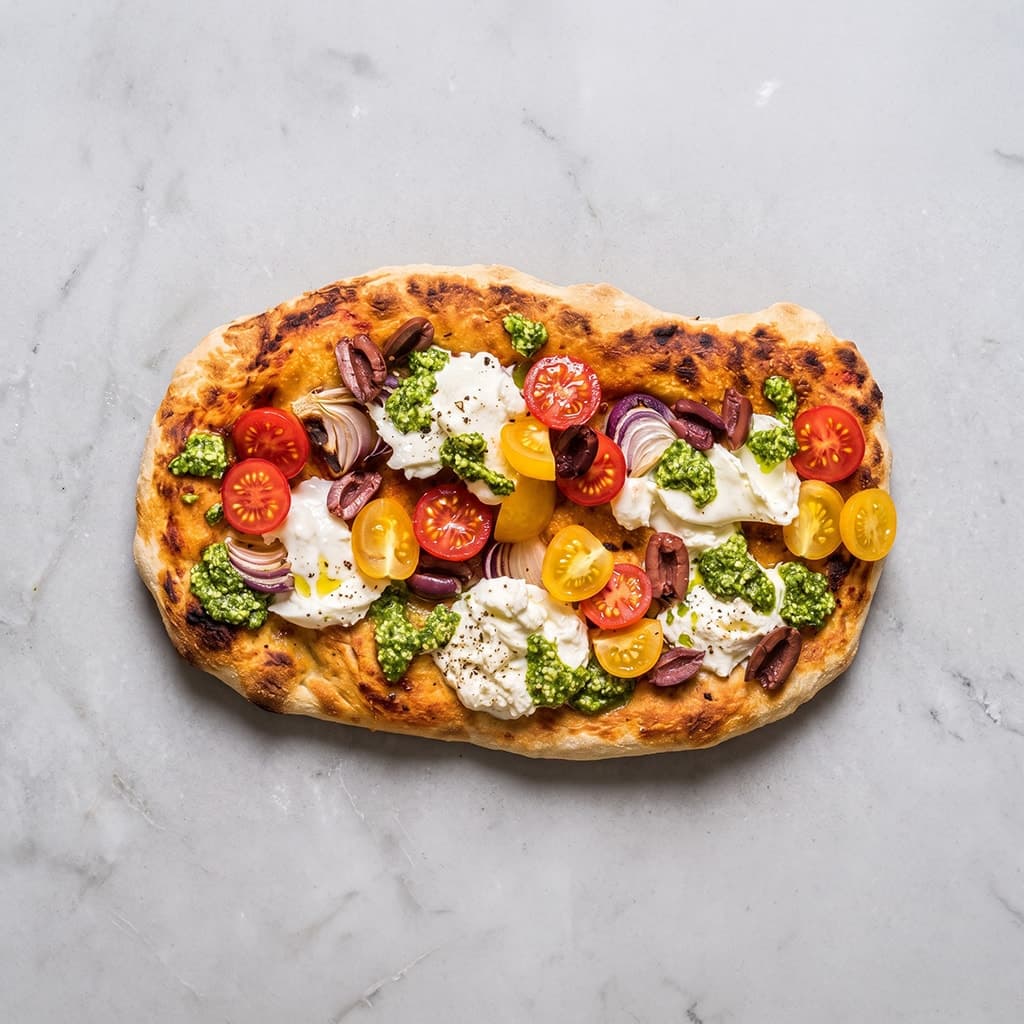
Oval Roman flatbread on a wheat, rice and soy blend. Very high hydration and a multi-day fridge maturation give a crisp shell and an airy, light interior.
Pinsa romana is a modern product with an old-sounding name. The Italian entrepreneur Corrado Di Marco registered the trademark in 2001, for a dough made from a blend of wheat, rice and soy flours. The name was chosen to echo the Latin verb pinsere, to pound or crush. The ancient Roman origin that is often repeated has no historical basis, as Di Marco himself has said.
The formula in numbers
- Hydration
- 80%
- Salt
- 2.2%
- Olive Oil
- 2%
- Portion
- 4 × 250 g, about 29.1 cm
- Fermentation source
- Instant Yeast
- Bulk at room temperature
- 2 h
- In the fridge
- 44 h
- Final proof
- 2 h
- Flour strength
- W 300–380
- Flour protein
- 12–14%
How to prepare it
- Flour543 g
- Water434 g
- Salt12 g
- Instant Yeast0.18 g
- Olive Oil11 g
The yeast is dosed for the fermentation times of this formula. The calculator adjusts it to your flour, your kitchen and your schedule.
- W 300–380
The dough
A blend of wheat, rice and soy flour, water, salt, yeast and 2% olive oil. The wheat in the blend has to be strong, W 300 to 380.
The rice and soy are what let the dough carry this much water and still stretch.
- 80% water
Mixing
At 80% hydration this dough is very wet. Hold back a part of the water and add it slowly, once the dough has come together. Work in the oil at the end.
Wet your hands instead of adding flour.
- 48 h
Fermentation
2 h at room temperature, then 44 h in the fridge. The long cold maturation belongs to the style.
Change the hours in the calculator and the yeast dose follows.
- 2 h
Dough balls
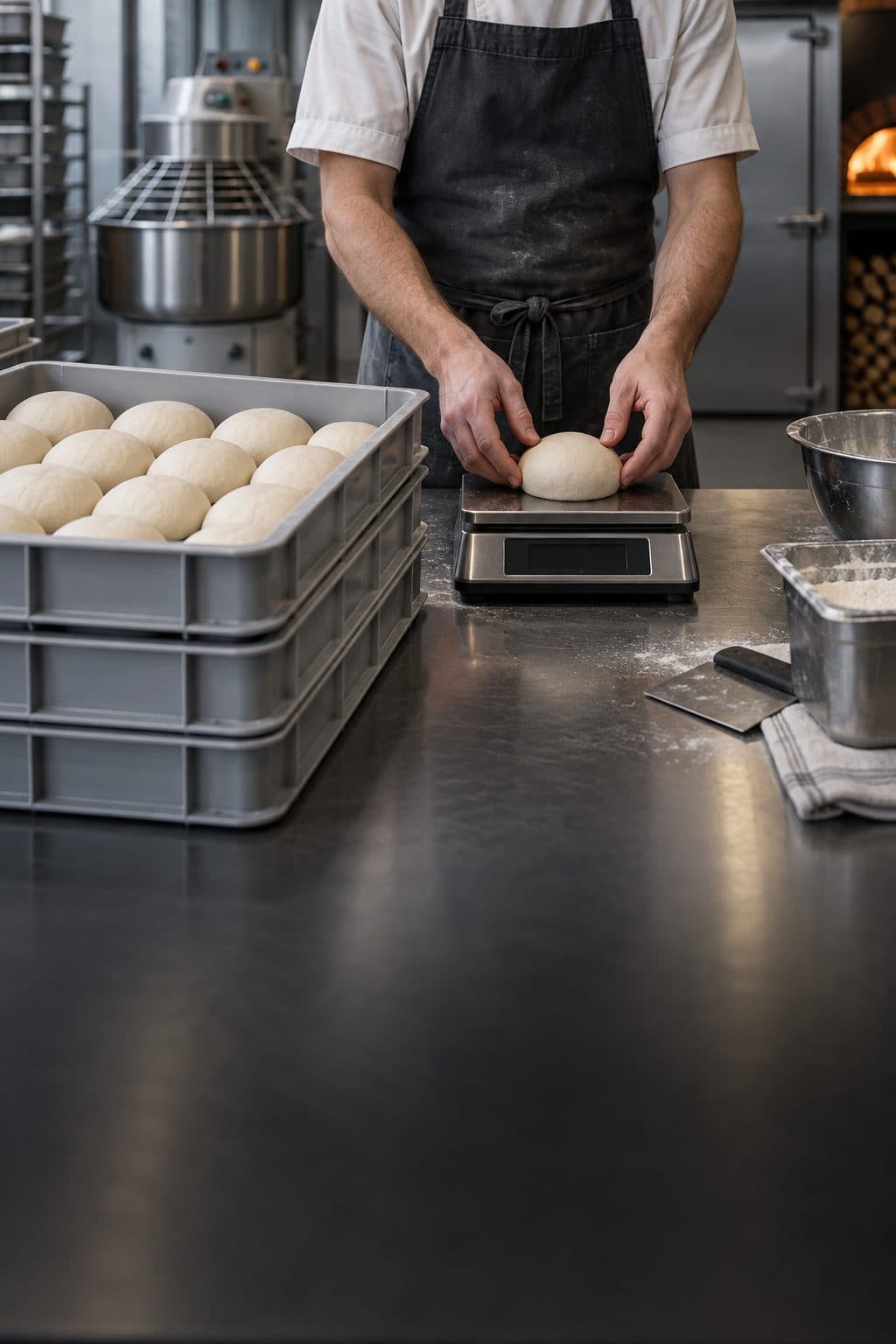
Divide the cold dough into 4 pieces of 250 g, shape them gently into balls and leave them covered at room temperature for 2 h.
Handle them lightly. The dough should keep the bubbles it has built.
- 7 min
Shaping and baking
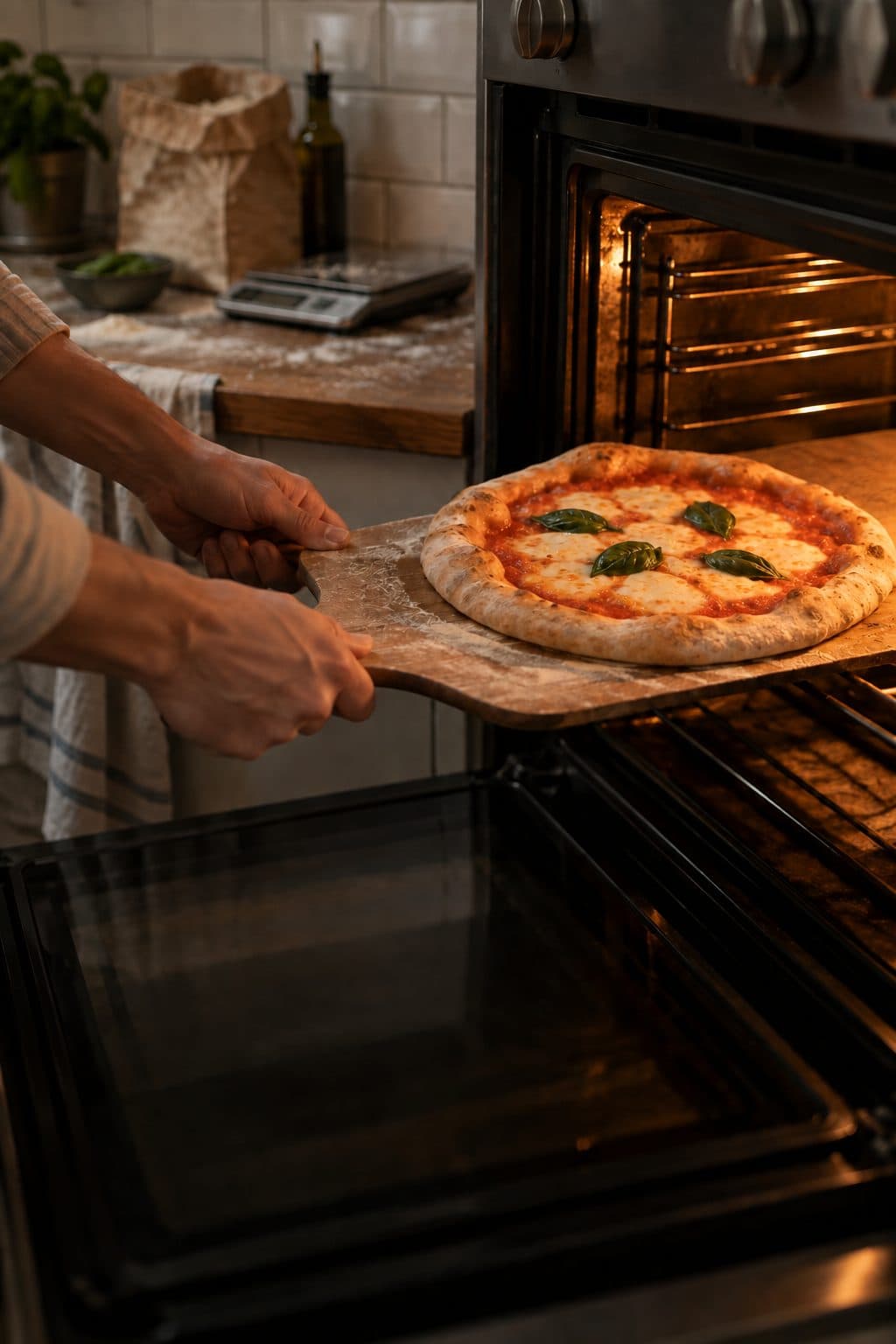
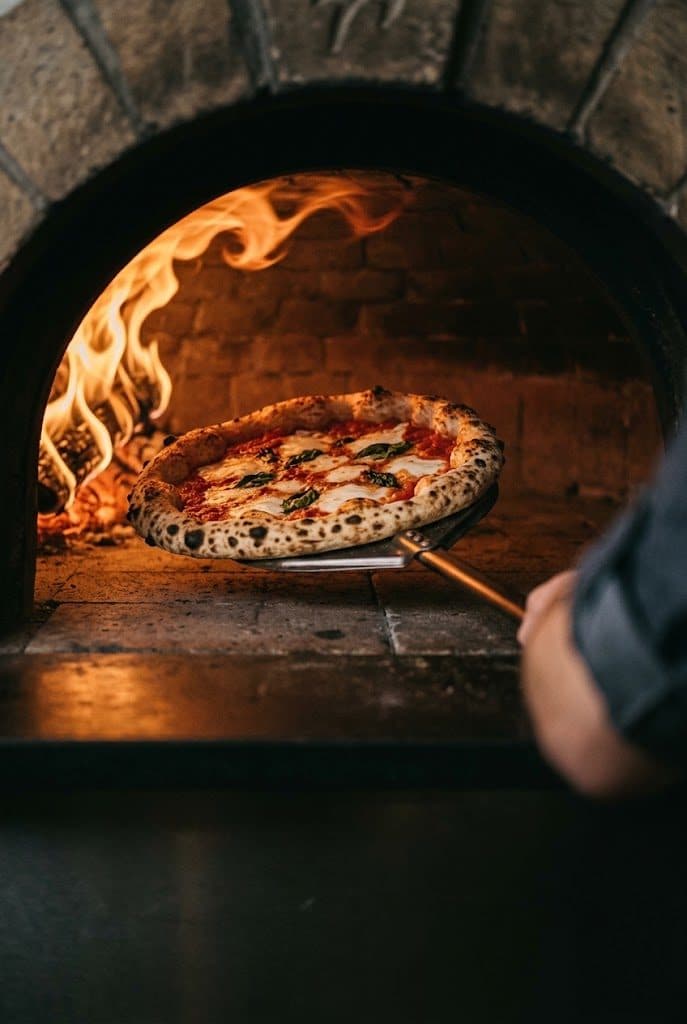
Dust the bench and the ball generously with rice flour or semolina. Press the ball out from the centre with flat fingers into a long oval and keep the bubbles in it. If it springs back, let it rest for a few minutes. Bake at around 300°C (572°F) for about 7 min.
The rice and soy brown faster than wheat alone, so a pinsa bakes at a lower temperature than a Napoletana.
The most common mistakes
Wrong:Rolling the dough out with a rolling pin
Right:Press it out with flat fingers, so the bubbles stay in the dough.
Wrong:Using plain wheat flour alone
Right:Use a blend with rice and soy flour. They let the dough hold 80% water.
Wrong:Cutting the time in the fridge short
Right:Give the dough its 44 h in the cold. The long maturation is part of the style.
Wrong:Baking it as hot as a Napoletana
Right:Stay at around 300°C (572°F). The blend browns faster than wheat alone.
Recommended flours
Flour for this formula: W 300–380, 12–14% protein. Ranked by fit, then by availability in your country, then by popularity.