
Pandough
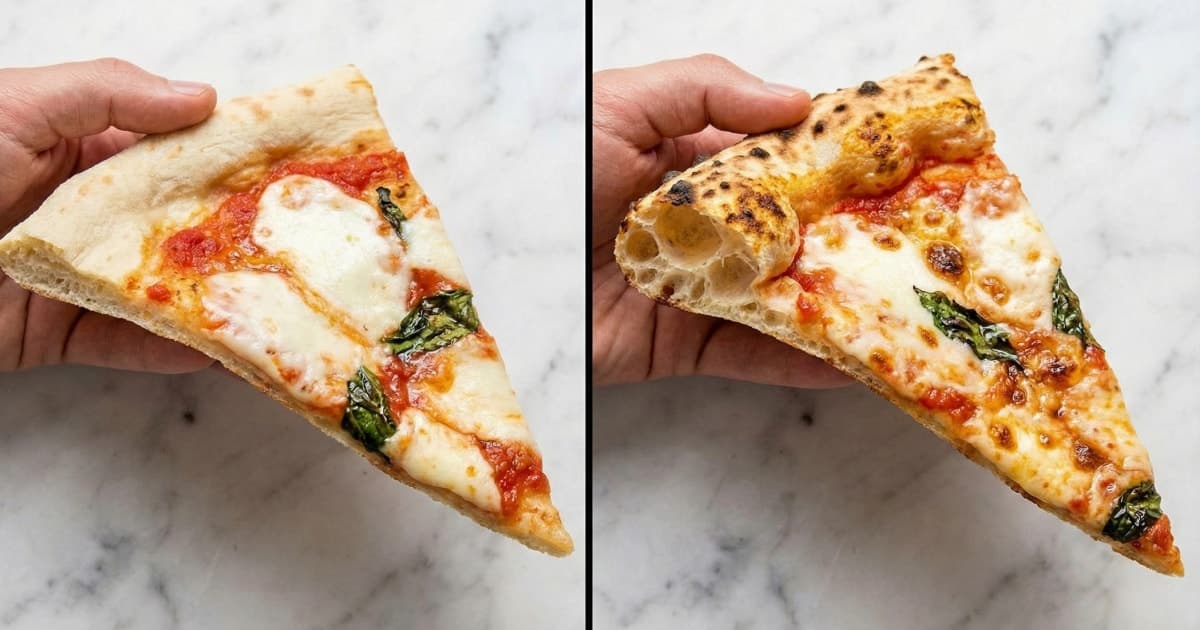
Two pizza doughs side by side showing the difference between properly and improperly matched flour and hydration

Why Most Neapolitan Pizza Recipes Are Missing One Critical Factor

Guides
Pandough Team
January 6, 2025
8 min read
neapolitanflour-sciencehydrationfermentationW-strengthdough-troubleshooting

You've been there, right? You find a celebrated Neapolitan pizza recipe online, maybe from a famous pizzaiolo. You buy a kitchen scale and measure every gram with scientific precision. You give the dough a full 24-hour slumber in the fridge.

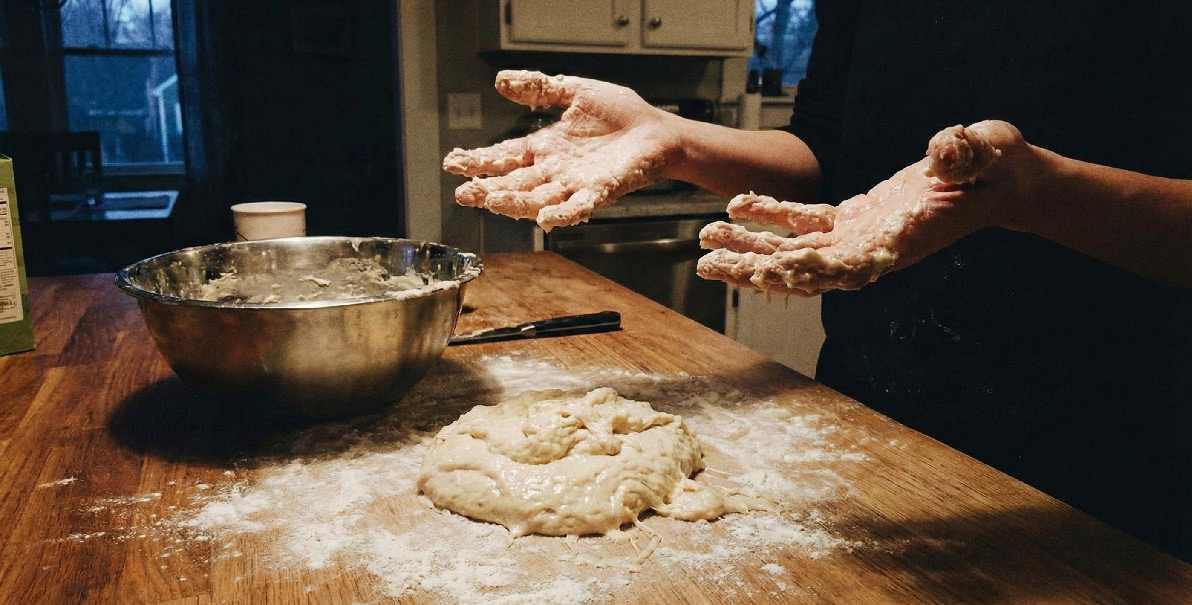
And what do you get for your troubles? A sticky, shapeless blob that tears if you so much as look at it. A dough that pancakes into a sad, dense frisbee. Or a crust that comes out of the oven with a disappointingly gummy center.

You're not a bad baker. You're just the victim of a well-intentioned lie.

The internet is flooded with advice: "Practice your stretching," "Knead it for 10 more minutes," "Just lower the hydration." But this rarely fixes the deep, underlying issue.

The problem isn't your technique. It’s the one crucial secret the recipe never told you about the bag of flour sitting in your kitchen.

The Myth of the "One-Size-Fits-All" Neapolitan Recipe

Most online pizza recipes follow a tired, predictable script. A baker discovers a magic formula that works wonders in their kitchen, with their specific brand of flour, in their specific climate. They share it with the world, proclaiming it the one true path to pizza nirvana.

"65% hydration, 0.1% instant yeast, 24-hour cold ferment."

"You have to use Tipo 00 flour."

"Follow my exact steps and you can't go wrong."

Except you can go wrong. And you probably have.

The issue is that recipes are passed around like photocopies of photocopies, losing critical context with each share. A formula that creates magic with Caputo Pizzeria flour in a Naples pizzeria behaves completely differently with another brand of "00" flour in your home kitchen. The 65% hydration that gives one baker a silky, manageable dough creates a soupy, unworkable mess for another.

This isn't a small detail. It's the very reason your pizza journey is a rollercoaster of frustratingly inconsistent results. It's why so many passionate home bakers just give up.

Flour Isn't an Ingredient. It's a System.

Here’s the bombshell most recipes leave out: not all flours are created equal. In fact, even two different bags both labeled "Tipo 00" can be so wildly different that using them in the same recipe will give you complete opposites.

What truly dictates your dough's fate are three hidden characteristics that most recipes pretend don't exist:

1. Flour Strength (The "W" Value)

Think of the W value as a flour's endurance—its ability to resist over-fermenting. A higher W means the gluten network is a marathon runner, capable of handling long fermentation times without breaking down. A lower W flour is a sprinter; it rises fast but gets exhausted and collapses quickly.

  • Weak Flours (W 180–220): Sprinters. Best for same-day doughs fermented for less than 8 hours.
  • Medium-Strength Flours (W 240–280): The sweet spot. Perfect for the classic 24-hour ferment used in most Neapolitan pizzerias.
  • Strong Flours (W 300+): Marathon runners. Built for the long haul—think 48- to 72-hour cold ferments.

Try to force a weak flour into a 48-hour marathon, and you'll return to a soupy, structureless mess. Use a strong flour for a 4-hour sprint, and you'll get a rubbery, unstretchable muscle—the gluten never had a chance to relax.

2. Water Absorption

Every flour has a thirst level. Caputo Pizzeria absorbs about 59% of its weight in water. Caputo Nuvola, a different "00" flour, absorbs around 61%. This tiny 2% difference is enough to transform the dough's feel. Your 65% hydration recipe will produce a noticeably different dough with each.

While higher protein often means a thirstier flour, it’s not a perfect correlation. The specific wheat variety and milling process matter just as much.

3. Hydration Tolerance

Beyond simple absorption, flours have a limit to how much water they can handle before they lose their composure and become a sticky, slack mess. Some flours can gracefully handle super-high hydration (70%+). Others fall apart above 62%. Pushing your flour past this breaking point results in dough that tears when you shape it and loses all its structure in the oven.

Same Recipe, Different Flour, Different World

Imagine two bakers, both following the exact same recipe: 65% hydration, 24-hour cold ferment.

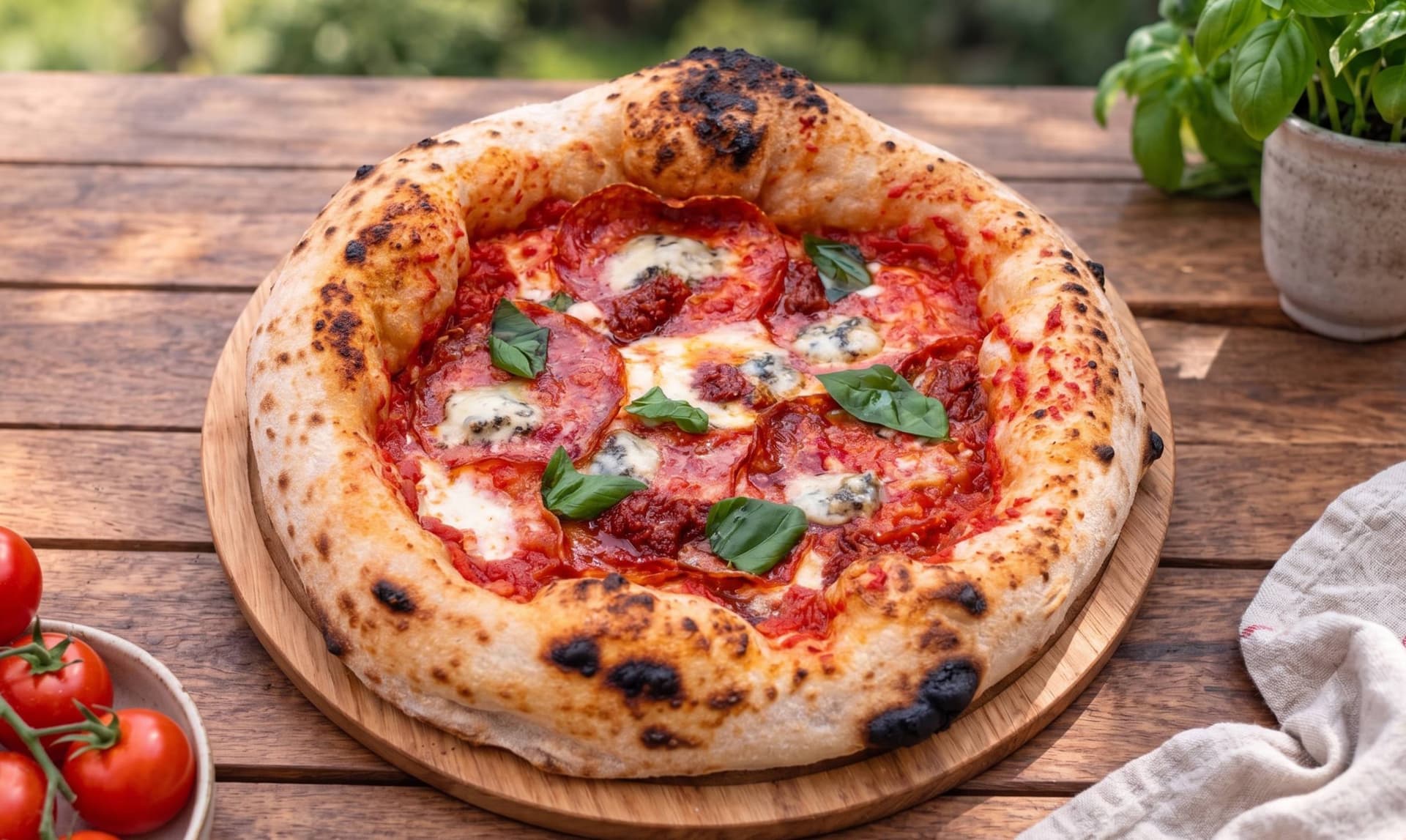
Baker A is using Caputo Pizzeria (W 260–280, ~59% absorption). For them, the dough is a dream—supple, stretchy, and forgiving. The final pizza is magnificent, with a light, airy, beautifully puffed-up crust (the cornicione).

Baker B is using a generic all-purpose flour (roughly W 150, ~55% absorption). At 65% hydration, their dough is a nightmare. It’s a sticky puddle that glues itself to every surface, tears instantly, and bakes into a flat, dense cracker.

Both bakers followed the rules. Only one got pizza worth eating.

Your Dough Failures Are Not Random

Once you see through the flour matrix, the common pizza failures become painfully predictable:

  • The Soupy Mess (Over-proofing): You used a weak flour with a long ferment. The gluten gave up hours ago. The dough is now a sticky, deflated puddle that bakes into a gummy brick.

  • The Rubber Tire (Under-proofing): You used a super-strong flour with a short ferment. The gluten is still a tense, wound-up muscle. It fights you at every turn and refuses to stretch, resulting in a tough, chewy crust.

  • The Tear-Fest: Could be weak gluten, but it's often simpler: you've added more water than the flour's structure can physically support.

  • The Gummy Center: Everyone blames the oven, but it's usually excess "free water" that the flour couldn't absorb. It turns to steam and ruins the delicate, airy crumb you worked so hard for.

Why Pizzaiolos Don't Talk About W-Values

There’s a reason these secrets aren’t common knowledge. In Naples, a professional pizzaiolo doesn't need to think about W values.

They’ve used the same brand of flour, from the same local mill, for decades. Flour is their constant. Through thousands of repetitions, they have developed a deep, intuitive feel for how that specific flour behaves in their climate. They don't need numbers; they adjust by touch, by sight, by instinct.

You, the home baker, have none of that. You buy whatever "00" flour you can find, you switch brands, and you bake in a totally different environment. You need a system, not just intuition.

The gap between a pizzaiolo's ingrained knowledge and a recipe's simplistic instructions is a graveyard of failed pizzas.

A Better Way: The Flour-Aware Mindset

Instead of treating flour as just another item on the ingredient list, it's time to see it for what it is: the primary constraint that dictates everything else.

The logic is flipped on its head:

  1. Start with your flour. Identify its strength (W value) and absorption profile.
  2. Let the flour dictate the fermentation time. Weak flour = short ferment. Strong flour = long ferment. No exceptions.
  3. Set hydration based on what that specific flour can handle. A flour that absorbs 55% water might be perfect at 60% hydration. Another might need 68% to feel the same.
  4. Calculate yeast last. With time and temperature locked in, the yeast amount becomes a simple math problem, not a wild guess.

This is the flour-aware approach. It acknowledges that flour isn't interchangeable. It’s the foundation. Get the foundation right, and the house will stand. Get it wrong, and no amount of clever decorating can save it.

Generic Recipe vs. Flour-Aware Planning

AspectGeneric RecipeFlour-Aware Planning
HydrationFixed guess (e.g., '65%')Tailored to flour's absorption
FermentationArbitrary time ('24 hours')Matched to flour's strength (W)
YeastOne-size-fits-all amountCalculated based on all variables
Flour ChoiceVague 'Use Tipo 00'Specific flour with known behavior
ConsistencyA total crapshootReliable, repeatable results
TroubleshootingEndless trial and errorClear diagnosis based on data

Stop Making These Mistakes

"Protein percentage is the same as strength." Nope. Protein affects gluten quantity, but W value describes gluten quality and endurance. They are not the same.

"I'll just copy the hydration from that YouTube video." Bad idea. 65% hydration is meaningless without knowing the exact flour it was paired with. It's like saying "drive for 30 minutes" without knowing the speed.

"My 24-hour recipe is sacred." No, it's not. A dough's fermentation curve is unique to its flour. Your flour might peak at 18 hours or 48 hours. Forcing it into a 24-hour box is asking for trouble.

The Bottom Line

Let's say it one more time: Neapolitan pizza recipes don't fail because you're a bad baker. They fail because they treat flour as an interchangeable commodity.

Flour is not just an ingredient. It is a dynamic system. It dictates the rules of hydration, fermentation, and yeast.

Once you embrace this, everything changes. The failures are no longer mysteries. The successes are no longer happy accidents. You're in control.

A flour-aware system—one that tailors the dough plan to the actual flour in your kitchen—is the key to unlocking consistent, amazing pizza. It eliminates the guesswork and delivers reliable results, no matter which bag of flour you bring home.

Ready to Stop Guessing?

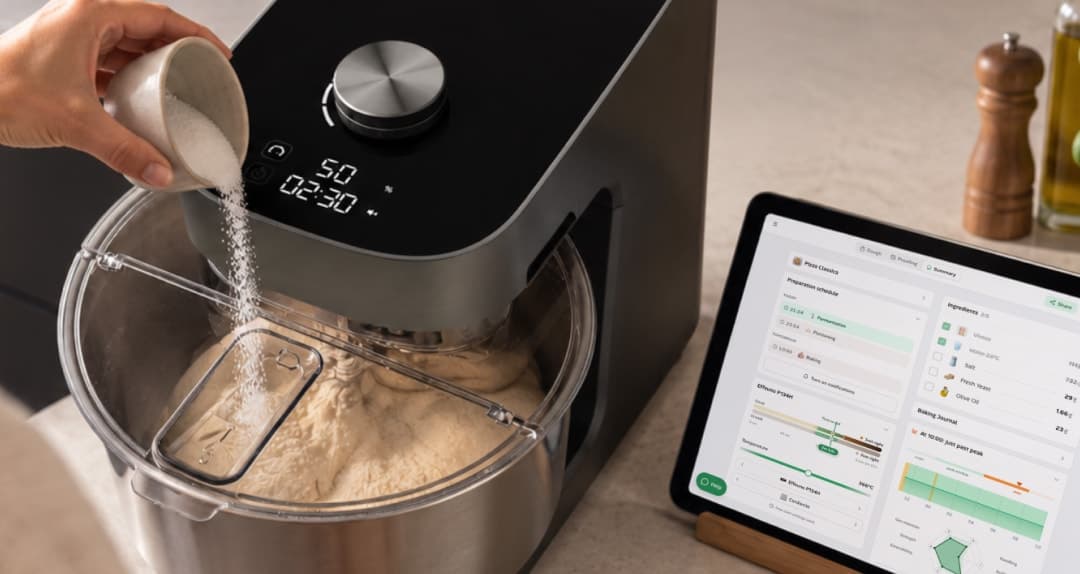
Pandough's calculator does the hard work for you. It builds a dough plan based on your flour's unique properties, not a generic recipe that was doomed from the start.

Plan Your Perfect Neapolitan Dough

Recipe: neapolitan pizza • Flour: caputo pizzeria • 65% hydration

Try it

Or dive into our flour database to finally understand what your flour is truly capable of.

The secret to amazing pizza isn't the recipe. It's understanding your flour.

Share this article

Pandough

The precision dough calculator for pizza enthusiasts. Calculate perfect hydration, fermentation schedules, and ingredient amounts for pizza and bread.

© 2026 Pandough.app·TermsPrivacy

Made with flour, water, and obsession

Why Most Neapolitan Pizza Recipes Are Missing One Critical Factor | Pandough | Pandough