
Understanding Pizza Dough Fermentation: A Complete Guide
Fermentation is where pizza dough develops its flavor and character. Understanding how it works will dramatically improve your pizza.
What Happens During Fermentation
When flour, water, and yeast combine, a complex biological process begins:
- Yeast activity: Yeast consumes sugars and produces CO2 (creating bubbles) and alcohol (flavor compounds)
- Enzyme activity: Enzymes break down starches into sugars, feeding the yeast
- Gluten development: Time allows gluten to relax and strengthen
- Flavor development: Organic acids and alcohols create the characteristic fermented flavor
The longer fermentation continues, the more complex these flavors become - but there's a limit based on your flour's strength.
Fermentation Schedules
Same-Day Pizza (4-8 hours)
Good for: Weeknight pizza when you forgot to plan ahead.
- Mix dough with slightly more yeast (1.5-2%)
- Bulk ferment at room temperature for 2-3 hours
- Divide and ball
- Final proof at room temperature for 2-4 hours
- Bake
Result: Decent pizza, but less complex flavor.
Standard Cold Proof (24-48 hours)
Good for: Most home bakers. Great balance of convenience and flavor.
- Mix dough with standard yeast (0.3-0.5%)
- Brief bulk ferment at room temperature (1-2 hours)
- Divide and ball
- Cold proof in refrigerator for 24-48 hours
- Remove from fridge 2 hours before baking
- Bake
Result: Good flavor development, manageable schedule.
Extended Cold Proof (48-72 hours)
Good for: Flavor enthusiasts willing to plan ahead.
- Mix dough with minimal yeast (0.1-0.2%)
- Brief bulk ferment at room temperature (30-60 minutes)
- Divide and ball
- Cold proof in refrigerator for 48-72 hours
- Remove from fridge 3-4 hours before baking
- Bake
Result: Complex, nuanced flavor. Requires strong flour (W 300+).
Matching Flour to Fermentation Time
Not all flours can handle long fermentation. The flour's W strength determines its limits:
| W Strength | Max Cold Proof | Best For | |------------|----------------|----------| | 260-280 | 24-36 hours | Same-day or overnight | | 300-320 | 48-72 hours | Multi-day cold proof | | 340+ | 72-96 hours | Extended fermentation |
Caputo Pizzeria (W310) handles 48-hour cold proofs easily. For longer ferments, consider Nuvola (W320) or similar high-strength flours.
Signs of Proper Fermentation
Well-fermented dough:
- Has doubled (or nearly doubled) in size
- Shows visible bubbles on the surface and edges
- Passes the "poke test" - indent springs back slowly
- Has a pleasant, mildly tangy smell
- Stretches easily without tearing
Over-fermented dough:
- Looks deflated or flat
- Very slack and hard to shape
- Strong sour or alcoholic smell
- Tears easily when stretched
- Dough balls spread flat instead of holding shape
Adjusting Yeast for Your Schedule
The calculator can help you dial in the right yeast percentage for your fermentation schedule:
Calculate yeast for your schedule
Recipe: neapolitan pizza • 65% hydration
Tips for Better Fermentation
-
Be consistent: Use the same flour, hydration, and temperature each time until you understand how your dough behaves
-
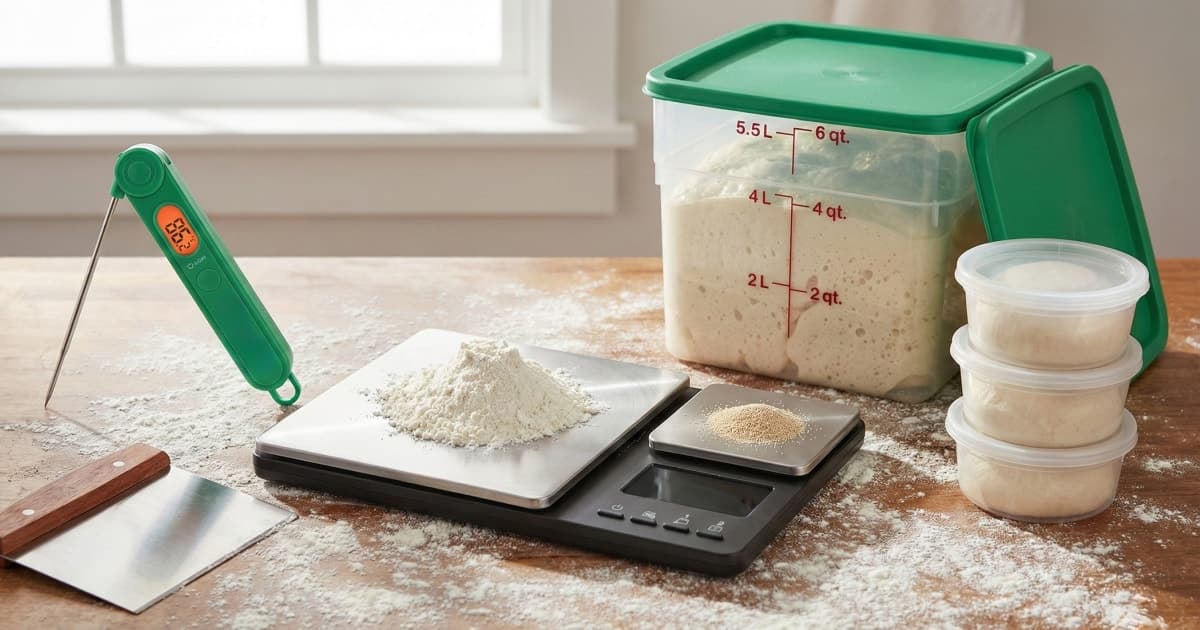
Control temperature: Use a thermometer. Even a few degrees affects timing significantly
-
Use less yeast than you think: Long fermentation requires very little yeast. Trust the process
-
Don't skip the final proof: After cold fermentation, dough needs 2-4 hours at room temperature to relax and warm up
-
Keep notes: Track your timing, temperatures, and results. This is how you improve
Common Fermentation Problems
Dough didn't rise
- Water too hot (killed yeast) - should be 65-75°F
- Not enough yeast for short fermentation
- Old/dead yeast
- Too much salt (inhibits yeast)
Dough over-proofed
- Too much yeast
- Fermented too long for flour strength
- Room temperature too warm
- Forgot about it (we've all been there)
Dough has no flavor
- Fermentation too short - try 24+ hours cold
- Too much yeast causes fast, flavor-less rise
- Try reducing yeast and extending time
Next Steps
Ready to experiment with fermentation? Our calculator adjusts yeast automatically based on your fermentation schedule:
Plan your fermentation
Recipe: neapolitan pizza • Flour: caputo pizzeria • 65% hydration